Welcome to this week’s crypto stories, where Google taps prediction markets, Spain cashes out vintage Bitcoin, and Pi Network rolls out its latest desktop upgrade.
The Bank of England sets new stablecoin limits, Hong Kong expands its blockchain bond offering, and Zypto launches ETN payments across its ecosystem, bringing faster, low-cost, and environmentally friendly blockchain transactions to the world.
Let’s dive in.
Google Finance integrates prediction market data
Google is incorporating prediction market data from Kalshi and Polymarket into its search results as part of its AI-powered upgrade, enabling users to view real-time probabilities for future market events.
According to a Thursday announcement, the prediction market data will be available in the next couple of weeks. The feature is part of an AI-powered revamp of Google Finance, which also introduces Deep Search, driven by its Gemini models, along with new live earnings features.
The inclusion enables users to view market odds on major events, such as elections, inflation, and regulatory outcomes on digital and traditional assets, and track how forecasts have shifted over time by typing a question directly into Google’s search bar.
Kalshi operates under the oversight of the US Commodity Futures Trading Commission (CFTC), while Polymarket runs on blockchain infrastructure (Polygon) outside the regulated derivatives space.
Their appearance on Google Finance suggests that institutional investors and data providers are beginning to treat event contracts as valuable sentiment indicators rather than speculative novelties.
The integration blurs the line between traditional financial data and decentralized information flows. For years, prediction markets remained niche platforms within crypto communities. Now, by surfacing this data through Google Finance, prediction-based insights are being normalized alongside stock and commodity information.
Financial analysts say the move could help refine market sentiment analysis. Prediction contracts often react more quickly than equities or bonds to political or macroeconomic signals, offering traders an early glimpse of shifting expectations. As a result, these datasets may soon complement conventional economic indicators, such as CPI forecasts and Treasury yields.
The move comes as US regulators continue debating how to classify event contracts. Kalshi’s regulated model contrasts sharply with Polymarket’s decentralized operations, which previously faced CFTC enforcement action. Yet, both platforms are gaining traction, especially as crypto-native investors explore event trading as a hedge against macro uncertainty.
Furthermore, other companies have been integrating prediction markets into their platforms. In March, Robinhood launched a prediction market hub directly within its app. In October, World App integrated Polymarket, while MetaMask announced plans to do the same.
If mainstream platforms like Google continue integrating prediction market data, it may prompt further policy clarity from regulators. It could also accelerate the acceptance of decentralized markets as a legitimate component of the financial information landscape. An evolution that mirrors Bitcoin’s gradual integration into traditional market dashboards over the past decade.
Spain plans to sell 13-year-old Bitcoin stash
Spain’s Institute of Technology and Renewable Energies (ITER) is preparing to sell a multimillion-dollar Bitcoin reserve, according to Spanish media reports.
The public research institute, based in Tenerife, previously bought 97 BTC for just $10,000 as part of a blockchain study. Now, it is worth more than $10 million.
Thirteen years later, the Tenerife Island Council is finalizing the sale through a Spanish financial institution authorized by the Bank of Spain and the National Securities Market Commission (CNMV).
The institute’s Bitcoin was never intended as an investment but as a tool for technological research. However, the asset’s dramatic appreciation has transformed it into a financial windfall for the island’s public research sector.
Once the liquidation is complete, the proceeds will support scientific innovation. Funds from the sale will be redirected to ITER’s upcoming research programs, with a particular focus on quantum technologies.
Spain’s move comes amid increasing regulatory scrutiny of the crypto sector.
The Spanish government has recently stepped up its crypto oversight efforts, introducing stricter tax reporting and disclosure requirements for both individuals and institutions. These measures are part of Spain’s broader effort to align with the European Union’s Markets in Crypto-Assets (MiCA) framework.
Under the new rules, crypto holders are required to declare all transactions and balances, while companies offering digital asset services will face increased scrutiny from the Bank of Spain and the CNMV.
This tighter regulatory stance reflects growing concern about financial crimes and the misuse of cryptocurrencies. In a high-profile case earlier this year, Spanish authorities, working in collaboration with Europol, dismantled a $540 million cryptocurrency fraud network.
Against this backdrop, ITER’s upcoming Bitcoin sale takes on added significance.
The institute’s decision to liquidate its decade-old holdings through authorized financial channels aligns with Spain’s cautious approach to digital assets. If completed, the transaction will stand as one of the country’s most notable public-sector crypto liquidations.

Pi Network rolls out new upgrade
The Pi Core Team announced the release of Pi Node version 0.5.4 on November 6. The application was also renamed “Pi Desktop” to reflect broader functionality. Users can now access the Node, mining app, and Pi App Studio through a unified interface.
The upgrade introduces several key enhancements, including fixes for community-reported issues related to Node mining rewards, automatic updates, and block container creation. It also introduces a new open port verification system to ensure accurate Node bonus calculations.
Furthermore, Pi Desktop now allows approved external links, letting users access blogs and resources directly from the mining app and Pi App Studio. These improvements collectively boost performance and the overall user experience for Pi Node operators.
The team wrote,
“As announced in the recent update, Pi App Studio is now directly accessible from the top navigation bar in Pi Desktop, positioned alongside the Pi mining app and Node. An App Studio display issue where deployed apps were not displaying previews correctly has been resolved.”
This release builds on the OpenMind pilot project that demonstrated Pi Network’s capacity for decentralized AI training. OpenMind reported that more than 350,000 active nodes participated in the proof-of-concept, completing image recognition workloads.
Moreover, this partnership marked Pi Network Ventures’ first investment, signaling a shift toward real-world blockchain uses.

Bank of England caps individual stablecoin holdings at £20,000
The Bank of England unveiled comprehensive stablecoin regulations that will cap individual holdings at £20,000. The temporary limit aims to protect traditional banking as digital money adoption grows, but certain requirements need to be made, though.
Businesses face a £10 million cap, but exemptions exist for larger firms. Still, the rules apply only to sterling-denominated “systemic” stablecoins used for payments, not crypto trading. The Bank of England will require these issuers to back their tokens with specific assets.
Issuers must hold 60% of their backing assets in short-term UK government debt, while the remaining 40% must be held in unremunerated accounts at the bank. New issuers considered systemic at launch can hold up to 95% in the UK government debt.
The Bank is also considering emergency liquidity arrangements for systemic stablecoin issuers. During market stress, the central bank would provide liquidity if issuers cannot sell their backing assets in private markets. This backstop reinforces financial instability.
The UK will split stablecoin oversight between two regulators.
The Financial Conduct Authority (FCA) will supervise consumer protection, conduct issues, and non-systemic stablecoins used primarily for crypto trading. The Bank of England will handle prudential regulation, financial stability risks, and regulate systemic stablecoins once HM Treasury designates them.
Overall, the regulators will publish a joint approach document in 2026 explaining how the split works in practice.
Why do stablecoin holding limits matter?
The £20,000 individual cap addresses concerns about rapid deposit flight from traditional banks. If millions of people suddenly moved savings into stablecoins, banks would lose funding needed for lending to the real economy.
The Bank of England has analyzed these risks; thus, the holding limits remain temporary. They will lift once the financial system adapts to digital money without threatening credit availability.
The limits do not apply to stablecoins used for wholesale financial market settlement in the Bank and FCA’s Digital Securities Sandbox.

Hong Kong issues third blockchain bond offering
Hong Kong is marketing its third blockchain bond offering across four currencies as the city intensifies efforts to become Asia’s leading crypto hub.
The government plans to sell tokenized green bonds denominated in U.S. dollars, Hong Kong dollars, euros, and offshore yuan. This marks Hong Kong’s third blockchain-based bond sale since 2023.
Hong Kong is utilizing blockchain bonds to demonstrate that distributed ledger technology can drive institutional-grade finance. The strategy goes beyond crypto-native innovation.
The city is digitizing traditional financial products to demonstrate to mainstream institutions that blockchain infrastructure is effective for regulated securities. The approach is paying off.
Six corporate issuers have raised $1 billion through tokenized bonds in Hong Kong this year. Also, state-based Chinese companies Shenzhen Futian Investment Holdings and Shandong Hi-Speed Holdings recently priced blockchain bonds in the city.
The blockchain bond offering fits into Hong Kong’s comprehensive push to dominate Asia’s crypto landscape. The city has rolled out multiple digital asset initiatives throughout 2025.
In August, the Hong Kong Monetary Authority (HKMA) launched a licensing regime for stablecoin issuers. The new rules require any entity issuing fiat-referenced stablecoins to obtain HKMA approval.
Hong Kong approved Asia’s first spot Bitcoin and Ethereum ETFs in April 2024. In October, it also approved the spot Solana ETF, ahead of the U.S. The ETFs give retail and institutional investors regulated access to cryptocurrency without directly holding tokens.
Asian policymakers are racing to match U.S. President Donald Trump’s pro-crypto policies, which have made America increasingly attractive for digital asset businesses. The city offers compelling advantages. Hong Kong maintains 0% capital gains tax on crypto for individuals.
Also, the government recently waived taxes on cryptocurrency investment gains for hedge funds and private equity firms.
While these tokenized bonds use private blockchain infrastructure rather than public networks like Ethereum, they legitimize distributed ledger technology for traditional finance.
Success with government blockchain bonds could accelerate the tokenization of other real-world assets.
USDC payroll goes mainstream
Paystand, a B2B payments platform processing $20 billion annually, has acquired Bitwage, a crypto payroll service that has handled over $400 million in digital wages across 200 countries since 2014.
The acquisition integrates USDC and USDT salary payment capabilities into enterprise workflows. Bitwage’s infrastructure serves 90,000+ workers and freelancers by converting fiat salaries into stablecoins via the Circle and Tether platforms. Paystand’s existing client base of 1,000 enterprises will gain access to this capability.
The combined platform eliminates ACH processing delays, weekend cutoffs, and cross-border foreign exchange fees associated with traditional payroll systems. While Bitwage has historically supported Bitcoin and Ethereum, the merged entity will prioritize layer-2 solutions and Solana for faster settlement.
Companies can initiate payroll transactions outside traditional banking hours, with employees receiving USDC for conversion to local currency via exchanges or digital banking services. Bitwage reports no security incidents during its 11-year operating history.
The acquisition occurs amid regulatory developments in the United States. The Trump administration has expressed support for cryptocurrency initiatives, while the SEC has provided guidance on stablecoin custody requirements.
Moreover, other companies have partnered with the crypto industry this year.
Visa completed a $1 billion acquisition of Bridge, a stablecoin platform. Mastercard has a USDC settlement program for introducing on-chain dollar transactions. Then, Japanese enterprises can integrate JPYC after the launch of the All Banking System API gateway.
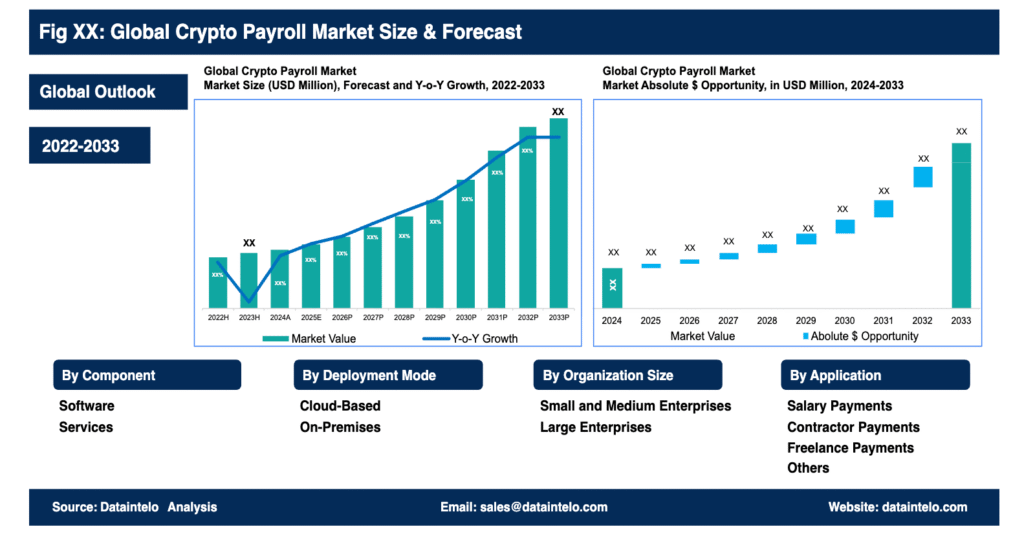
The crypto payroll market includes platforms such as Deel and Rippling, both of which offer cryptocurrency payment options. According to DataIntelo, the market is projected to reach $6.38 billion by 2023.
Electroneum payments go live across Zypto ecosystem
Zypto has officially integrated ETN payments across its entire ecosystem, expanding real-world utility for Electroneum users. ETN can now be used inside Zypto App and at Zypto.com to pay for crypto cards, mobile top-ups, bill payments. and even USDC-to-cash transactions.
The integration delivers near-instant, low-cost transactions powered by Electroneum’s efficient blockchain, and marks another major step in connecting the ETN community with Zypto’s full suite of DeFi products.
Find out more here.
Closing remark
Google Finance’s feature underscores the increasing relevance of crowd-based forecasting within the broader financial ecosystem. Bitcoin’s growth potential and global usability are proven in the Spanish Institute of Technology and Renewable Energies’ actions.
The Bank of England’s analysis marks a major step toward implementing the UK’s stablecoin regime. Hong Kong’s accelerated crypto hub push responds to shifting global dynamics and positions it as a major player in the industry.
The 2025 stablecoin transfer volume reached $9 trillion, with a survey indicating that the majority view stablecoins as providing a competitive advantage. This bodes well for the crypto industry amid a more favorable regulatory environment.
And finally, Electroneum payments are now live across the Zypto ecosystem, connecting one of crypto’s fastest blockchains with Zypto’s expanding suite of real-world payment tools.
That’s a wrap for this week’s piece, so what do you think? Let us know below!
FAQs
What is Google Finance’s proposed new feature?
Google Finance plans to integrate prediction market data from Kalshi and Polymarket into its search results.
What does the Spanish research institute want to sell?
Spain’s Institute of Technology and Renewable Energies (ITER) is preparing to sell a 13-year-old multimillion-dollar Bitcoin reserve.
What is Pi Network’s new upgrade?
The Pi Core Team announced the release of Pi Node version 0.5.4 (Pi Desktop).
What did the Bank of England do?
The Bank of England unveiled stablecoin regulations that will cap individual holdings at £20,000.
Which crypto asset did Hong Kong issue?
Hong Kong is marketing its third blockchain bond offering across four currencies (U.S. dollars, Hong Kong dollars, euros, and offshore yuan).