Welcome to the penultimate crypto news report for August!
This week, Gemini filed for an IPO, Japan approved a yen-backed stablecoin and the Stellar Development Foundation invested in Archax. BNB Chain leads the dApp platforms, as Ethereum signals a bullish setup with three signals, crossing a new milestone with stablecoin volume.
Let’s dive in?
Gemini files for IPO with $18 billion in assets
Gemini, the cryptocurrency exchange co-founded by Cameron and Tyler Winklevoss, has officially filed for an initial public offering with the US Securities and Exchange Commission (SEC) following a draft submission made in June.
According to the filing, Gemini intends to list its Class A common stock on the Nasdaq Global Select Market under the ticker symbol “GEMI.” Then, the Class B shares – held entirely by the co-founders and their affiliates – grant ten votes each.
Gemini’s IPO will be managed by a group of renowned companies, including Goldman Sachs, Morgan Stanley, Citigroup, and Cantor Fitzgerald. Its platform manages over $18 billion in customer assets, processed more than $800 billion in transfers since inception, and has a lifetime trading volume exceeding $285 billion.
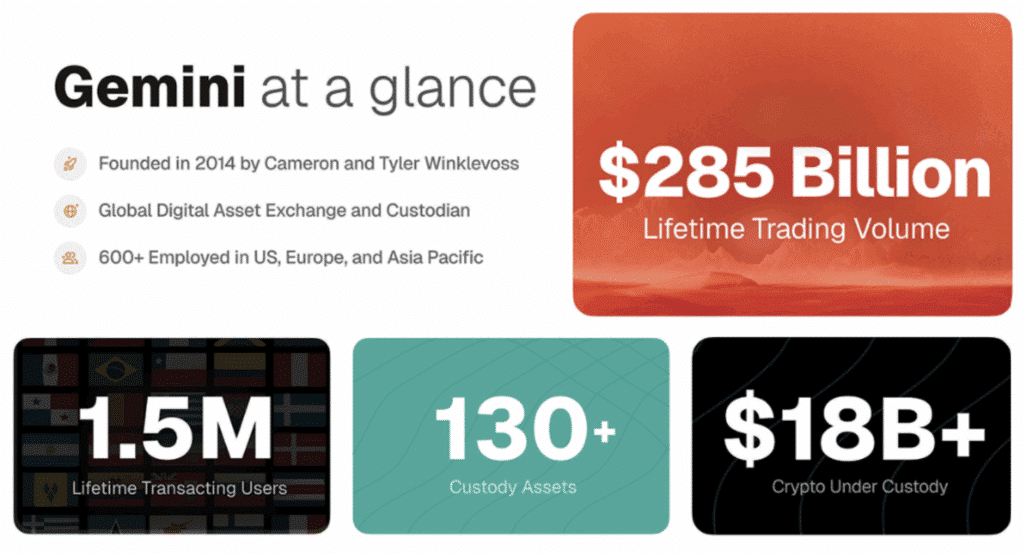
The US-based crypto exchange positions itself as a secure, user-friendly platform for digital asset trading and storage. The exchange reports serving more than 500,000 monthly active users and around 10,000 institutional clients in over 60 countries.
Gemini maintains a credit facility with Ripple, offering up to $75 million, scalable to $150 million, denominated in Ripple’s RLUSD stablecoin. Also, recall that the trading platform recently added XRP, Shibarium (SHIB), Dogecoin (DOGE), Solana (SOL), and Bitcoin Cash (BCH) to its cross-collateral options.
Ethereum’s triple threat bullish setup
Ethereum has surged past $4,000, backed by strong spot demand, a sharp reduction in exchange reserves, and rising open interest. Major players, including U.S. President Donald Trump and mining giant Bitmine, are also investing massively in ETH.
Adding fuel to the rally, Ethereum has flashed three strong bullish signals.
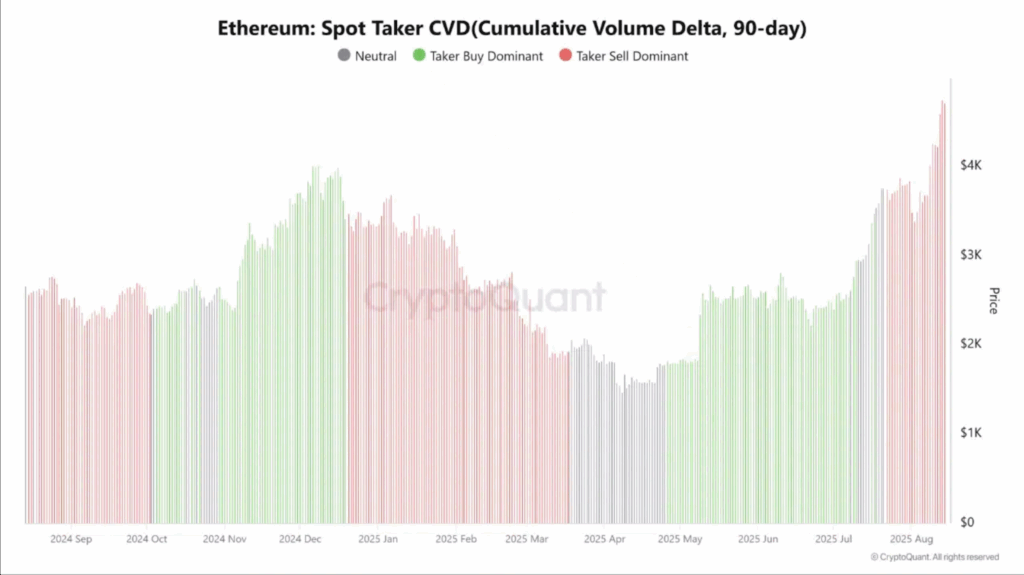
First, the Spot Taker CVD indicated a consistent taker buy dominance through June to August, driving a $2K-to-$4 surge and showing strong spot accumulation rather than short-term chasing.
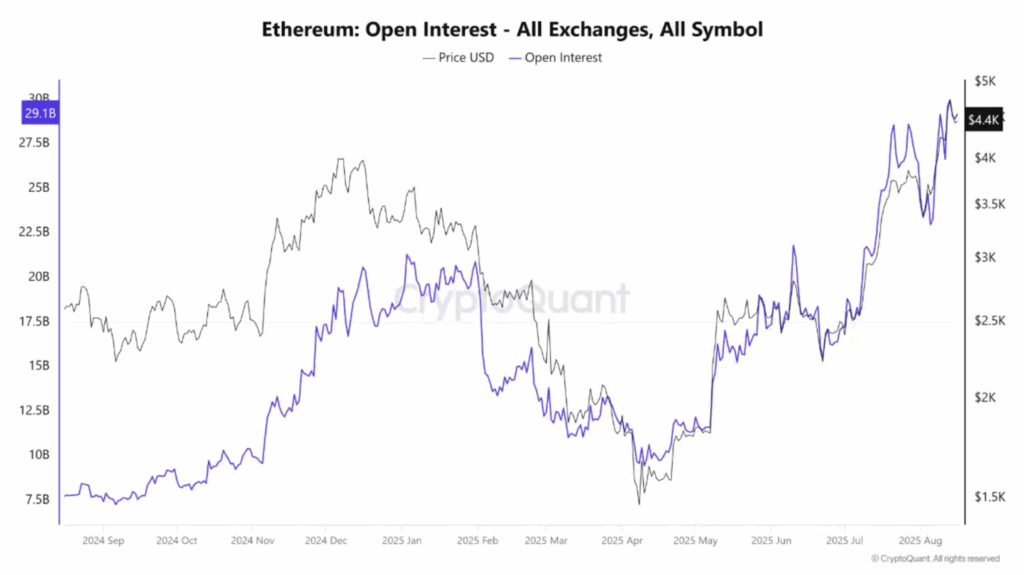
Second, the Open Interest has risen in tandem with price, hitting $29B, close to historical highs. Fresh capital is entering, with institutions driving momentum.
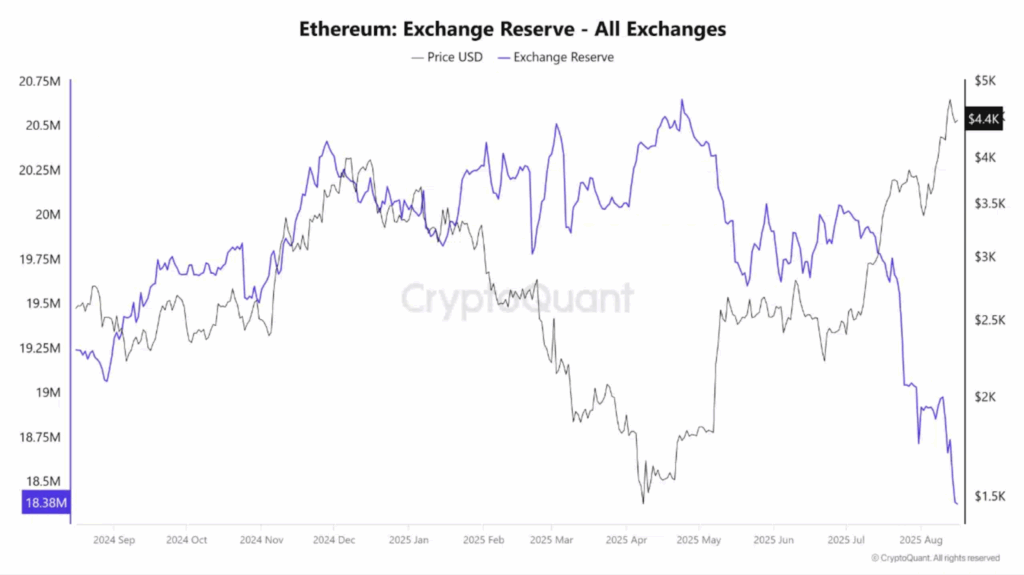
Third, the ETH exchange reserves have plunged to 18.38 million, a 12-month low, at press time. The supply crunch, paired with demand spikes, has set up a classic squeeze scenario (rapid price increase).
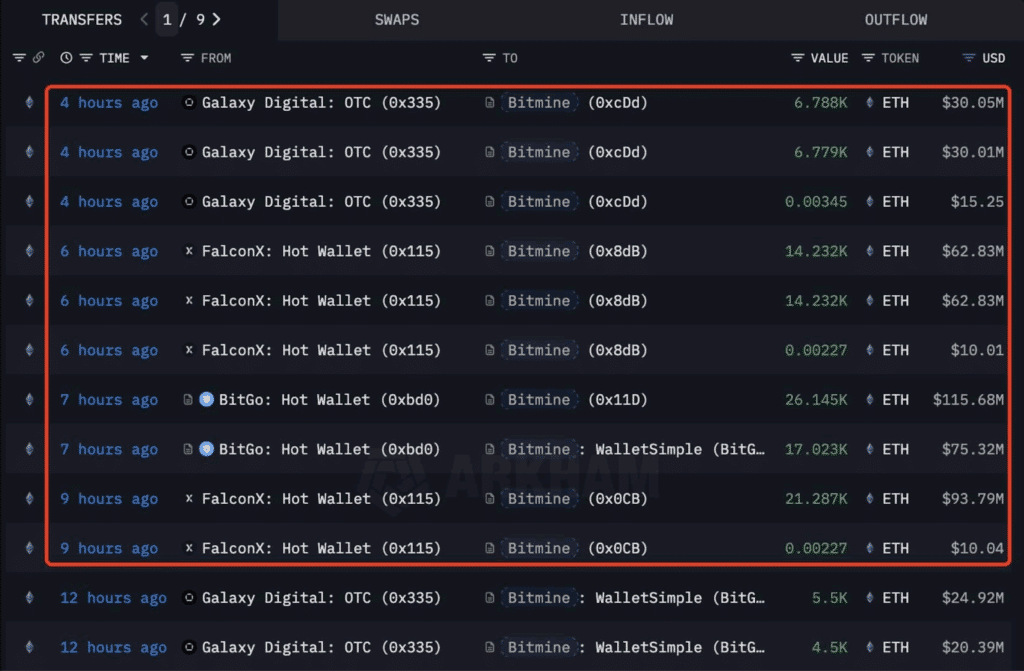
Meanwhile, large-scale buyers have been stepping in aggressively.
President Trump reportedly purchased 1,911 ETH worth $8.6 million, Bitmine Immersion Technologies (BNMR) also ramped up its holdings, buying 106,485 ETH worth $470 million. The total stash now stands at 1.29 million ETH, valued at $5.75 billion.
Similarly, Ethereum has found a new haven in Asia. Over the weekend, ETH’s value touched JPY659K in Japan and KRW2.32 million in South Korea. Its price climbed to local highs in both countries, proving that demand runs deeper than simple currency moves.
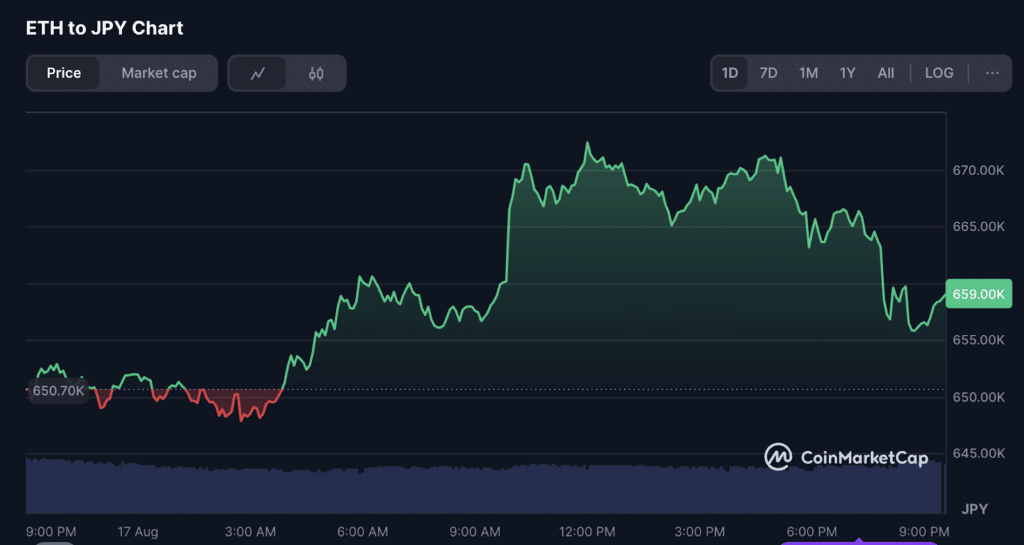
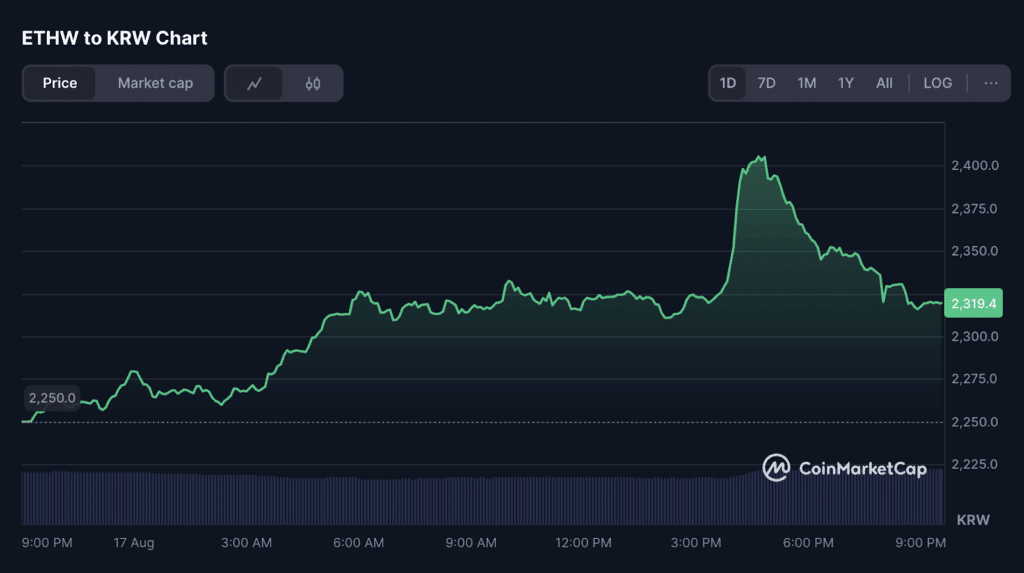
Such a rally is also an indicator of high regional demand, especially since both the Yen and Won have strengthened against the U.S. dollar this year.
Stablecoin volume on Ethereum hit $130B
The total stablecoins on the Ethereum network hit an all-time high (ATH) of about $130 billion. This trend has been rising since the low established in August 2023. It was in support of ETH’s dominance in stablecoin issuance. Plus, it is also an indication of how publicly listed companies were building on the ETH network.
Stablecoin supply is now in an upward trend, and market participants view the move as a precedent to an altcoin season. When stablecoin inflows surge, it indicates profit-taking activities or preparation to inject liquidity into non-stable crypto assets.
In this case, the surge was influenced by both.
The surge in stablecoin liquidity was driven by the spike in supply across multiple blockchains. This supply is projected to constitute about 10% of M2 by 2030, which is about $3 trillion – a bullish case for all cryptos.
The supply of PayPal’s PYUSD was approaching the $1 billion mark on Ethereum. On Solana, it stood at $250 million, as per Token Terminal data. Still, the supply of the highest-capped stablecoin, USDT, was back to growth mode.
This was mostly due to the capital rotation from Bitcoin (BTC). Most of these USDT were flowing from exchanges through the TRON (TRX) network. Also, USDC monthly transfer volume on the Aptos (APT) blockchain was at record highs of $8.60 billion. The transfer count followed with a peak value of $23.2 million.
With the U.S. aiming to be a hub for the crypto and AI revolution, the country holds a huge chunk of stablecoins. As of press time, they held $347 million in stablecoins, which bodes well for the crypto reserve it is building.
Furthermore, the passing of the two bills (GENIUS and STABLE Acts) by the U.S. Congress to streamline regulations and consumer protection around stablecoins looks to be finally meeting its purpose.
The most vital question now remains: can stablecoin flows unlock the next altcoin season? From these activities, the altcoin rally could be waiting for the stablecoin’s power.

Japan to approve yen-backed stablecoin
Japan’s Financial Services Agency (FSA) is preparing to approve the issuance of Japanese yen-denominated stablecoins as early as this fall. This marks the first time the country will allow a domestic fiat-pegged digital currency.
Tokyo-based fintech firm JPYC will register as a money transfer service provider within the month and will lead the rollout. Specializing in blockchain, JPYC will introduce a stablecoin that functions as a digital representation of the yen, while adhering to strict regulations.
The stablecoin, branded as JPYC, is available as an ERC-20 token on Ethereum, Polygon, and Shiden. JPYC is designed to maintain a fixed value of 1 JPY = 1 yen, backed by highly liquid and stable assets such as bank deposits and Japanese government bonds.
In practical use, consumers can apply for the token by transferring funds. Then, after purchase applications from individuals or corporations, the tokens are issued via bank transfer to digital wallets.
JPYC’s CEO, Norikata Okabe, mentioned that Yen stablecoins could have a major effect on Japan’s bond market.
He noted that since in the US, leading stablecoin issuers have become major buyers of US Treasurys, then if JPYC gains widespread adoption, it could boost demand for Japanese government bonds (JGBs).
Okabe also mentioned that countries lagging in stablecoin development risk higher government bond interest rates, as they miss out on a new class of institutional demand. So, monetary policy considerations are driving governments, including Japan, to accelerate stablecoin frameworks.
JPYC aims to foster a safe domestic ecosystem by supporting cashless transactions, international remittances, and corporate payments, while reducing foreign exchange costs in cross-border trade.
The FSA views this approval as more than a regulatory formality. It has emphasized that JPYC’s operations will fall under the framework of Japan’s Payment Services Act, with enhanced monitoring and compliance obligations.
Thus, JPYC’s success will depend on whether it can achieve widespread adoption in a field dominated by dollar-linked instruments.

Stellar Development Foundation invests in Archax
The Stellar Development Foundation (SDF), the organization supporting the Stellar blockchain, invested in UK-based digital asset exchange and tokenization firm Archax. The firms disclosed in this press release.
Archax has already started using Stellar, integrating the network into its in-house tokenization tool and launching a tokenized Aberdeen money market fund. Archax also acquired BaFin-regulated Deutsche Digital Assets last month in a bid to expand into crypto exchange-traded products in Europe.
Although the size of Stellar’s investment wasn’t disclosed, this is part of a broader partnership to boost tokenized traditional financial instruments like bonds, funds, and stocks, often dubbed real-world assets (RWAs).
Global banks and asset managers are exploring this technology to reduce settlement times, increase transparency, and keep markets open around the clock. The tokenized RWA market has doubled over the past year to $26 billion and is reportedly projected to grow into a trillion-dollar market by 2030.
Raja Chakravorti, chief business officer at the Stellar Development Foundation, commented, “The Stellar network was purpose-built to enable fast settlement times, low costs, and the tokenisation of real-world assets that is the future of finance.”
At the time of writing, Stellar is trading at $0.41.
Related: Experience the best Stellar (XLM) Wallet App for iOS and Android
BNB Chain becomes the top dApp platform for August
BNB Chain (BNB) has emerged as the leading platform for decentralized applications (dApps), surpassing Ethereum (ETH) in the top 10 dApp rankings. According to data from August 2025, BNB Chain hosted 5,836 dApps, compared to Ethereum’s 5,096 dApps.
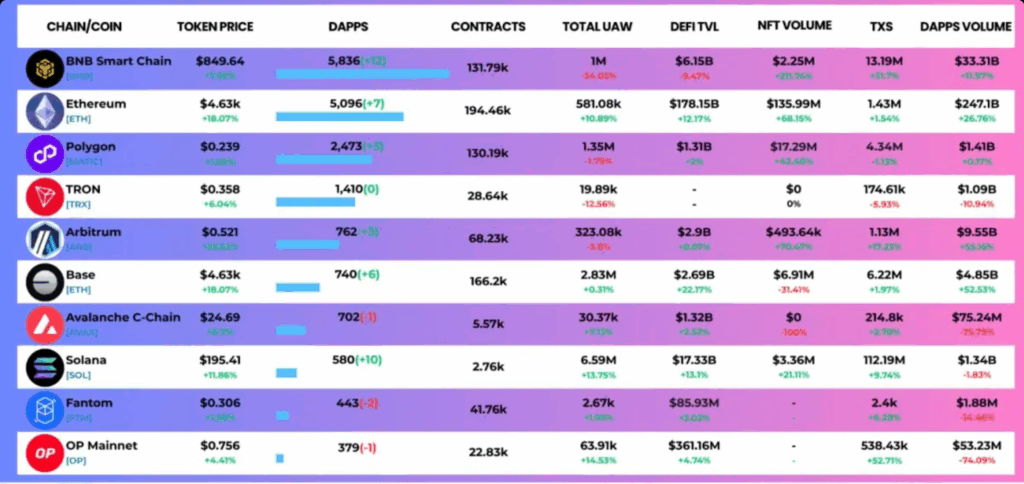
This shift highlights the growing preference for platforms offering low transaction fees and high throughput, particularly in the DeFi and Web3 sectors. Also, the transition is attributed to BNB Chain’s competitive advantages, including significantly reduced transaction costs and rapid processing times.
A 2023 Journal of Blockchain Research study noted that such efficiency could boost dApp adoption by up to 40%, underscoring the strong link between cost-effectiveness and decentralized development.
Additionally, the rise of Layer-2 solutions such as Polygon, Arbitrum, and Base – hosting 2,473, 762, and 740 dApps respectively – has accelerated the move toward scalable, low-cost infrastructure without compromising Ethereum’s compatibility.
Ethereum remains a dominant force in the dApp ecosystem, particularly in technical security and institutional adoption. With Ethereum remaining buoyant in maturity and institutional volumes, high-value, legacy dApps leading the way, the network still holds a lead in the number of users.
However, BNB Chain’s focus on cost-efficiency has enabled it to attract developers seeking to build fast and affordable applications, especially DeFi and NFTs. Meanwhile, Polygon, Arbitrum, Base, and others have carved out niche roles in the ecosystem, each offering distinct advantages based on speed, cost, or development tools.
This development marks a broader trend toward a multi-chain future. In it, users and developers are increasingly selecting networks based on efficiency, flexibility, and market reach, rather than defaulting to a single chain.
The DeFi market has also shown resilience, with both veteran and emerging projects (from the 2020-2022 era) regaining momentum and playing vital roles in the ecosystem’s evolution.
Zypto App: Multi-chain DeFi without limits
As the industry keeps breaking new ground, the tools you use matter more than ever. Zypto App is built to be your all-in-one DeFi wallet – secure, multi-chain, and designed to connect you to everything from trading and bridging to global payments and cold storage.
Supporting 24,000+ coins across leading blockchains, it’s what we believe to be the best DeFi wallet app for iOS and Android.
Discover more here.
Closing remark
Gemini’s public listing arrives at a time of growing enthusiasm in the crypto capital markets. With regulatory barriers easing, crypto firms are once again attracting investor attention.
Ethereum’s strong triple bullish signals bode well for it as stablecoin volume on the altcoin hit an ATH of about $130 billion. The JPYC is a step in the right direction, and if it gains traction, this could accelerate the digitalization of Japan’s payment infrastructure, reshaping consumer behavior and corporate finance.
BNB Chain’s ascent as the top dApp platform underscores the evolving dynamics of the blockchain ecosystem. While Ethereum keeps leading in smart contract innovation and institutional use, BNB Chain’s focus on scalability and cost-efficiency has enabled it to capture significant market share in 2025.
And finally, as the markets evolve, don’t miss the tools shaping the future. Explore why the Zypto App is, we believe, the best DeFi wallet for iOS and Android.
What’s your most memorable story this week? Share it with us below in the comments section.
FAQs
What is Gemini’s plan?
Gemini has officially filed for an initial public offering (IPO) with the US Securities and Exchange Commission (SEC).
What are the factors behind Ethereum’s surge?
Ethereum’s surge beyond $4,000 is backed by strong spot demand, a sharp reduction in exchange reserves, and rising open interest.
What happened to the stablecoin volume on Ethereum?
The total stablecoins on the Ethereum network hit an all-time high (ATH) of about $130 billion.
What plan does Japan have?
Japan’s Financial Services Agency (FSA) plans to approve the issuance of a yen-denominated stablecoin called “JPYC.”
Which company did the Stellar Foundation invest in?
The Stellar Development Foundation (SDF) invested in UK-based digital asset exchange and tokenization firm Archax.
How did BNB Chain become the top dApp platform?
According to data from August 2025, BNB Chain emerged as the leading platform for dApps by hosting 5,836 dApps.