June signs off with a big week in crypto news.
Pi Network integrates new features, Gemini launch tokenized stocks in the EU, while the SEC makes progress with approving the Solana ETF. We also examine how social discontent could push Gen Z towards BTC, and the implications of Circle’s Trust Bank for stablecoins.
Let’s get to it.
Pi Network integrates two new features for Pi2Day
Pi Network marked this year’s Pi2Day celebration last weekend with a wave of new announcements aimed at expanding its ecosystem and deepening user engagement.
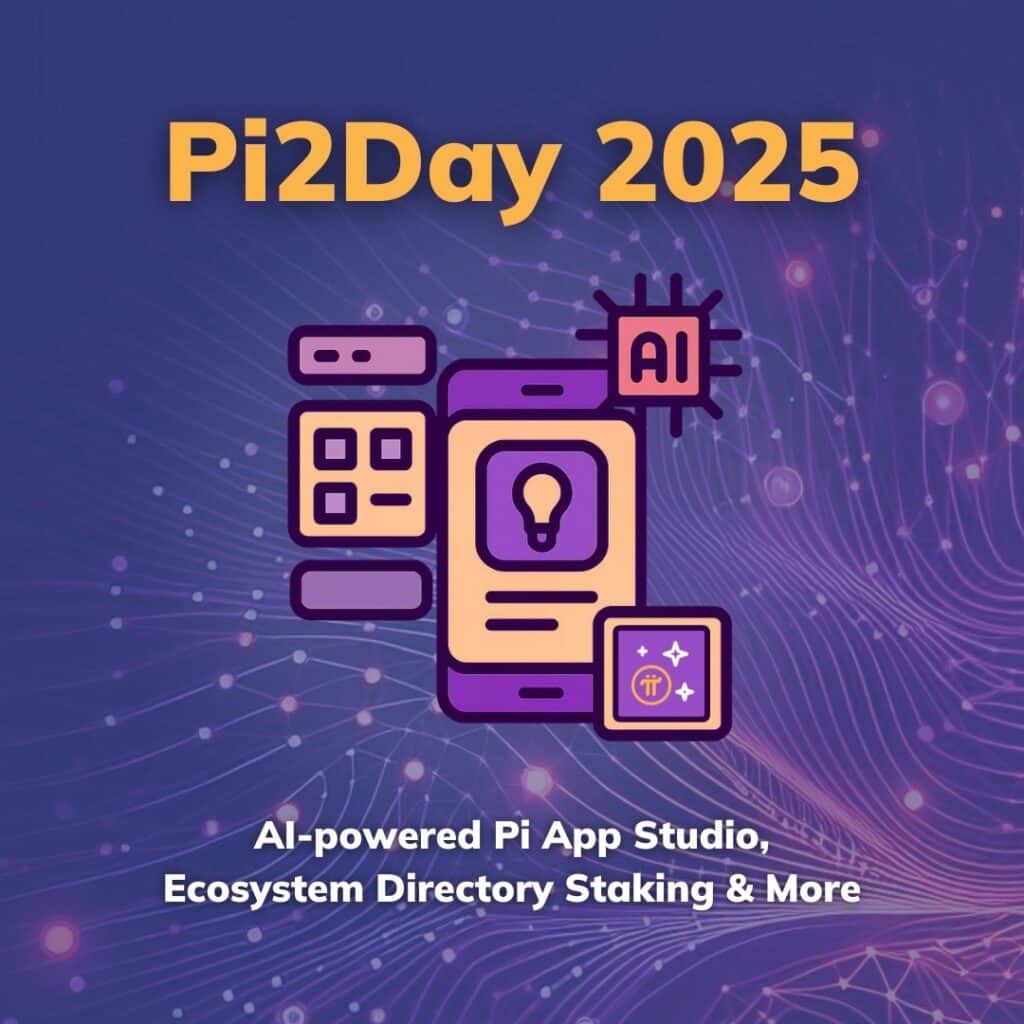
This year’s announcements centered around two strategic updates: a no-code AI app creation platform and a staking utility designed to decentralize app discovery within the ecosystem.
This approach empowers individuals without coding expertise to turn their ideas into functioning apps within the Pi ecosystem.
The team explained,
“Creating apps through Pi App Studio, therefore, means that you are able to own and run a business and product built entirely around your knowledge and ideas, which is made possible through the use of AI and supported by the blockchain ecosystem of Pi.”
At launch, the app studio includes two key features:
- Users can build topic-specific AI chatbots that reflect their knowledge and deliver tailored responses to end users.
- An open-ended app builder that allows users to describe what they want an app to do, which it then builds.

According to Pi Network, this tool allows users to own and operate digital businesses shaped by their insights, using AI as the engine and blockchain as the foundation. Meanwhile, beta access to the broader app builder is expected to roll out gradually.
In addition to the AI rollout, Pi Network also launched Ecosystem Directory Staking on Pi2Day. The new feature lets users stake Pi tokens to boost the visibility of apps they value, starting today.
This approach moves away from traditional ad-based promotion and centralized ranking algorithms. The staking model is simple, as the more Pi staked toward an app, the higher it appears in the Pi browser directory. This change gives users direct influence over which apps gain traction, rewarding quality and community impact over marketing spend.
The team stated,
“In addition to the utility of Pi in staking, this also seeks to provide greater exposure to apps that are of higher quality and provide for meaningful community engagement.”
The Pi team emphasized that this staking system aligns exposure with real engagement and innovation. It also reinforces the network’s mission to decentralize digital participation and reduce dependence on legacy Web2 models.
This staking utility moves away from the centralized ranking models common in Web2, creating a feedback loop in which the community distributes attention, value, and exposure.
Furthermore, Pi Network also announced several technical upgrades. These include a new Node version release and an improved Mainnet migration that onboarded over 500,000 new users.
Other updates include an extended auction for .pi domains through September 30 and a third-party fiat on-ramp integration that would streamline participation in the Mainnet ecosystem.
Also, on July 2nd, Zypto was added to Pi’s website showcasing official KYB-verified partners.
Gemini launches tokenized stocks in the EU
Crypto exchange Gemini has launched tokenized stock trading in the European Union, starting with shares of Strategy (previously known as MicroStrategy). This was announced on its social media account.
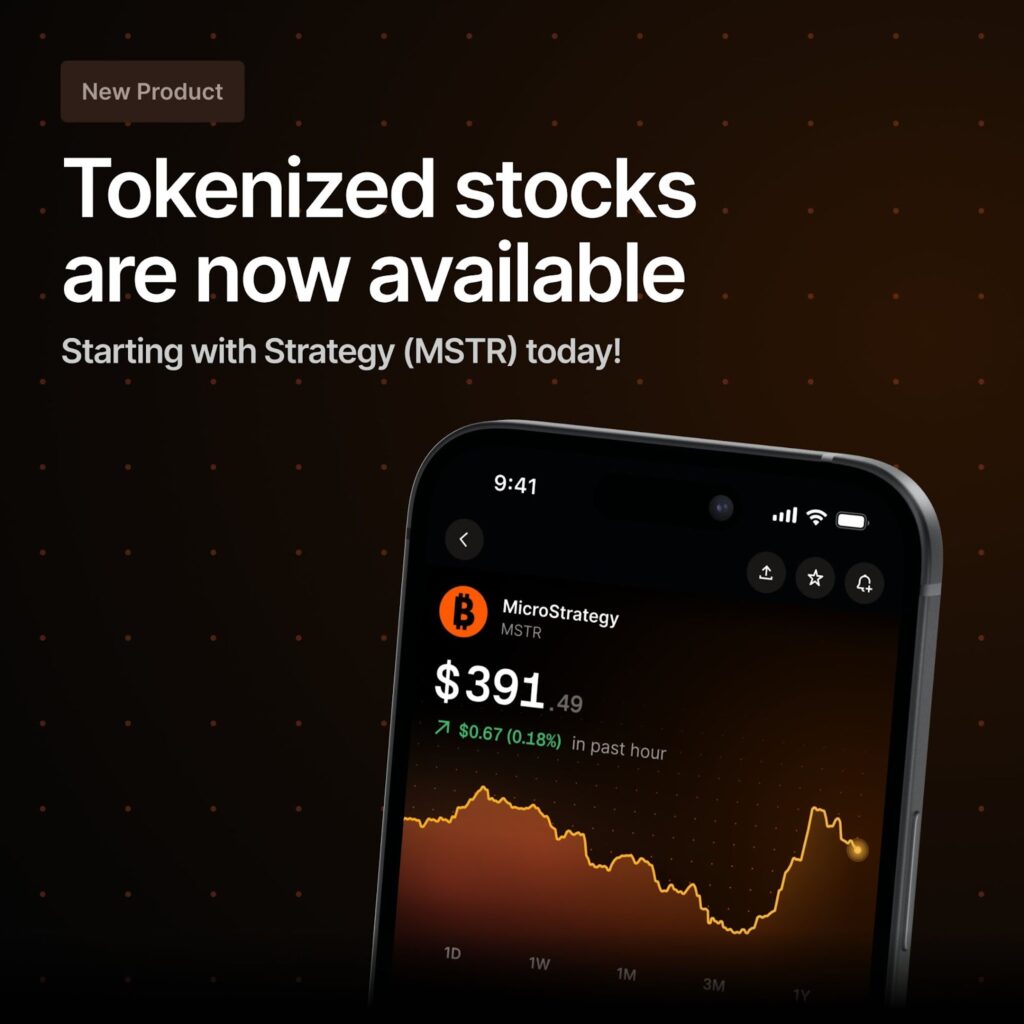
According to the post, the move opens up a new way for the firm’s European users to gain exposure to traditional equities utilizing blockchain technology.
This rollout is made possible through a partnership with Dinari, a company that focuses on converting real-world assets into blockchain-based tokens. Dinari recently received regulatory approval as a broker-dealer in the US, which gives it the legal basis to offer tokenized versions of American stocks to global markets.
Tyler Winkelvoss, CEO of Gemini, said,
“At Gemini, we’ve always believed in a ‘security-first’ approach, an ethos of asking for permission, not forgiveness. Partnering with Dinari aligns perfectly with that vision. We’re proud to offer our users a high-integrity option for accessing real-world financial markets on-chain.”
So, by introducing Strategy stock, Gemini enables EU customers to invest in one of Bitcoin’s largest corporate holders using digital rails instead of traditional brokerages.
The token is live on Arbitrum, an Ethereum layer-2 network, and Gemini plans to expand to more blockchain networks soon. Gemini stated that the European rollout marks a first step toward broader global availability, including a planned US launch soon.
Meanwhile, Gemini’s move reflects a growing trend of bridging traditional financial assets with blockchain-based trading in the crypto sector. Notably, tokenizing real-world assets (RWAs), such as stocks and bonds, is gaining momentum across the industry.
Some analysts project that tokenized assets could account for as much as $4 trillion in market value by the decade’s end. Kyle Reidhead of Milk Road Daily noted that the line between crypto and traditional finance is quickly fading.
He suggested that the financial firms best positioned to succeed will be those using blockchain technology behind the scenes to deliver faster, better, and more cost-effective services.
SEC close to approving staked Solana ETFs
REX Shares appears to be close to launching a staked Solana ETF after receiving a key response from the US Securities and Exchange Commission (SEC). This was disclosed via a post on social media.
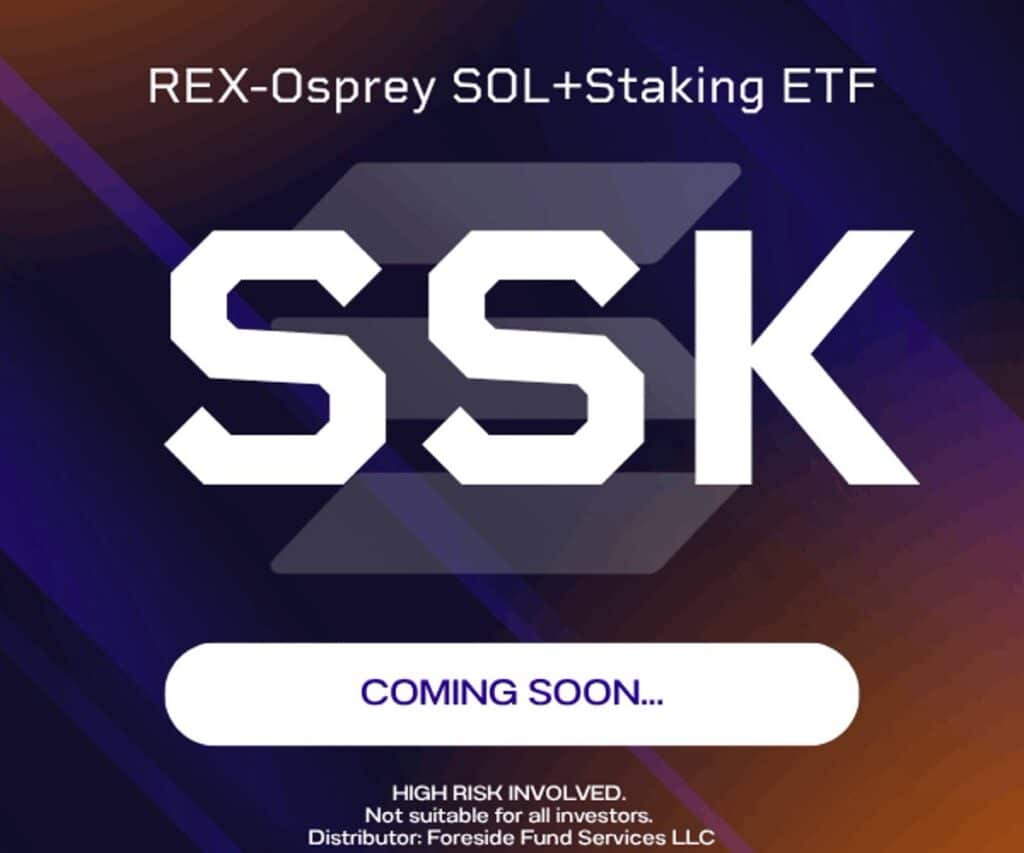
The firm wrote the SEC to confirm whether it had resolved all concerns about its proposed Solana and Ethereum staking ETFs. The SEC responded without further comments, sparking optimism that a launch could be near.
Industry analysts believe this could enable REX Shares to launch the country’s first crypto ETF that tracks staking rewards on the Solana blockchain.
Bloomberg ETF expert Eric Balchunas indicated that the SEC’s lack of objections is significant. According to him, this means that the proposal will likely receive approval soon.
“Rex also filled an updated prospectus, which totally filled in. Add it all up and it appears as though all systems go for imminent launch.”
Interestingly, REX Shares has begun marketing the product as the first-ever staked crypto ETF in the US. According to the firm, the product will track Solana’s performance while generating yield through on-chain staking.
Also, the SEC has yet to issue a formal approval for the product. If approved, this would position the firm to be the first to offer a staking-based crypto ETF, ahead of competitors still pursuing spot Solana products.
Meanwhile, Nate Geraci, president of ETF Store, highlighted that such a move could be a catalyst for the industry. He noted that this may encourage other applicants to explore staked crypto offerings.
He said,
“Looks like they believe comments have been resolved… crypto ETF summer commences.”
This development follows the SEC’s notable regulatory progress last month. At the time, the agency stated that staking models alone do not automatically fall under securities laws.
It also clarifies that extra features such as bundled services or early redemption options do not necessarily change that status. Consequently, this guidance has encouraged several asset managers to revisit their ETF strategies.
Many have now submitted new proposals focused on income-generating digital assets.

How social displeasure could push Gen Z towards BTC
With assets like Bitcoin, gold, and tech stocks rising, young people (Gen Z) are facing a tough financial landscape and an uncertain future. This is fueling rising frustration among them.
Yet, this dilemma also provides opportunities exceptional for previous generations.
Different financial experts and institutional investors have weighed in on the matter.
Jody Visser, a Wall Street veteran with 30 years of experience, emphasized that the aforementioned assets have attained record highs. In the interview with Anthony Pompliano, he outlined that artificial intelligence (AI) is the main driver behind this growth. Mostly in sectors like technology and energy.
However, Visser warned that this boom comes with remarkable challenges. He predicts that “digital employees” and humanoid robots will replace a large part of the traditional workforce. This shift will lead to deep restructuring in employment and productivity.
“They’re just saying we’re not going to hire as much, which means going forward, the people that are going to be hired are going to be digital employees.”
Additionally, Visser argued that political pressure on the Federal Reserve to cut interest rates could undermine the central bank’s independence. Over the long term, this could erode trust in the Fed and the US dollar.
“I believe that the Fed could be cutting rates…The inflation rate has given them the chance to cut rates…and the fact that the government is saying we don’t believe in Fed independence.”
In reality, young people today face a harsh truth: the traditional American dream – stable employment, career growth, and homeownership – feels increasingly out of reach. Rising living costs, student debt, and competition from AI in the job market make many feel the current economic system is no longer built for them.
Due to these factors, Visser believes Bitcoin will benefit from social instability and reduced faith in fiat currency.
He said,
“Young investors now skip stock and real estate, assets tied to the old system, and instead choose Bitcoin. They see Bitcoin as a new asset class they can carry easily, manage directly, and use without banks.”
Sharing Visser’s view, Changpeng Zhao, the former CEO of Binance, predicted that owning just 0.1 BTC (about $10,800 at the time of writing) could soon be worth more than buying a house in the US. Michael Saylor, chairman of Strategy, supported this view.
Jeff Park, portfolio manager at Bitwise, also noted that the American Dream is changing for younger generations. He explained that owning a full Bitcoin is starting to replace homeownership as a symbol of financial freedom for millennials and Gen Z.
Meanwhile, Pulte, the Director of the Federal Housing Finance Agency (FHFA), announced that US mortgages will start reviewing home loan applications using crypto assets like Bitcoin.
What Circle’s Trust Bank means for stablecoins
USDC stablecoin issuer Circle just applied to become a US national trust bank. As Congress moves to regulate stablecoins with the GENIUS Act, Circle’s move could signal an incoming power shift from USDT to USDC in the US market.
If approved, Circle’s new entity – First National Digital Currency Bank – would allow the company to custody its reserves. Also, it would be permitted to hold digital assets like tokenized bonds and stocks on behalf of institutional clients.
However, the trust bank license will not allow Circle to take deposits or issue loans. This marks a strategic regulatory step following Circle’s IPO earlier this month, which valued the company at nearly $18 billion.
More importantly, it signals Circle’s intent to align with forthcoming US stablecoin regulation. Tether’s USDT still dominates the global stablecoin market, with a 62.5% share. Much of that usage occurs outside US borders, especially across Asia.
Generally, USDT’s popularity comes from its liquidity and deep exchange integrations. But in the US, the regulatory space is shifting. Congress is preparing to pass the GENIUS Act into law. This landmark stablecoin bill requires issuers to hold fully backed reserves and obtain federal licenses.
Once passed, only licensed firms like National Trust Banks would be allowed to issue stablecoins at scale. This gives Circle a first-mover advantage. By becoming a national trust bank, Circle positions USDC as a fully compliant, US-regulated stablecoin – making it the preferred choice for banks and fintechs looking to integrate stablecoins.
Conversely, Tether operates under an El Salvador registration and is not regulated under US federal frameworks. That gap could become an issue if US exchanges are required to delist or restrict access to unlicensed stablecoins.
Circle’s strategy goes beyond regulation. It aims to control more of its infrastructure by directly managing USDC reserves, rather than relying on custodians. Moreover, the trust license would also enable Circle to serve institutional clients seeking to custody stocks and bonds, and not just crypto.
This positions Circle to lead in the next phase of stablecoin adoption, as tokenized assets and real-world applications grow. For everyday users, this could mean broader USDC integration in wallets, payment apps, and financial services.
As regulation tightens, US-based platforms may shift preference from USDT to USDC. To summarize, USDC could:
- Be used more in tokenized finance (real estate, stocks).
- See better integration with banking apps and neobanks.
- Offer stronger consumer protections under US law.
By and large, Tether still holds global dominance, but Circle’s trust bank application could shift the balance within US markets. In the coming months, the US may have to choose between offshore liquidity and onshore compliance.
Zypto’s referral model gains momentum
Zypto’s Referrals program continues to gain traction, rewarding users for growing the ecosystem.
New users who sign up via referral links receive, alongside the referrer, a welcome bonus, while referrers earn ongoing rewards – as passive income – when their invitees stay active. The program supports both short-term engagement and long-term network growth, with no complicated requirements to get started.
Find out more here.
Closing remark
Several crypto trading platforms are now entering the tokenized asset space. These companies are racing to meet growing investor demand for a unified platform that supports both crypto and equity trading.
With Pi App Studio, users can build and deploy applications using natural language instructions rather than complex programming. The SEC’s lack of a complaint bodes well for a potential approval of staked Solana ETFs.
For young people, prevalent problems like stable employment and career growth have led to an increased demand for Bitcoin. They see BTC as a new asset class they can carry easily, manage directly, and use without banks.
Finally, the Zypto community is earning as it grows, thanks to an innovative referral model built for short, and long-term passive rewards.
There you have it! So, what are your thoughts on this week’s news? Let us know in the comments section.
FAQs
Whose shares did Gemini launch tokenized stocks with?
Gemini launched tokenized stock trading in the European Union, starting with shares of Strategy (previously known as MicroStrategy).
What are the two updates from Pi2Day?
They include a no-code AI app creation platform and a staking utility for decentralizing app discovery.
Will the SEC approve staked Solana ETFs?
There is institutional and analyst confidence that the SEC will approve the staked Solana ETFs.
How will Bitcoin help Gen Z in the future?
Bitcoin will benefit from social instability and reduced faith in fiat currency from Gen Z in the future.
Why does Circle want to become a US national trust bank?
This would allow the company to hold digital assets like tokenized bonds and stocks on behalf of institutional clients.