GM fren, welcome to the first crypto news report in August!
TRON blockchain surged due to on-chain activity, Pi Network partner with payment platform TransFi, The Cardano community approved $70 million for network upgrades, Ripple’s valuation grew to a massive $15 billion, while Real-World Assets (RWA) surged as the crypto market reclaimed $3.8 trillion. Lastly, a Solana whale bought SOL worth $12M.
Let’s dive in.
TRON blockchain surges due to network activity
TRON’s engaging on-chain activity has pushed its native token, TRX, to huge heights. It marks a major achievement spurred by increased stablecoin transactions, an innovative governance model, and restored investor confidence.
Under Justin Sun’s leadership, TRON has strategically partnered with titans like Kraken. This has enhanced its technological prowess and increased its appeal within the crypto realm, where users and investors can flourish.
CryptoRank, Messari and Nansen, prominent platforms in blockchain research and analytics, have released comprehensive reports indicating TRON’s dominant performance throughout the first half of 2025.
According to CryptoRank’s report, USDT supply on TRON surged 41% to $81.2 billion, and achieved nearly $1 billion in quarterly revenue by Q2 2025 (its highest revenue to date). Also, its revenue burn during H1 2025 (nearly $319 million) was the highest, surpassing Ethereum and Solana.
Messari highlighted TRON’s technical development and ecosystem expansion, confirming its multi-faceted growth trajectory. It collaborated with the likes of Privy, Bridge, and AEON Pay. It also noted rising user activity through daily average transactions (12.6% QoQ), daily active addresses (5.9% QoQ), and average daily new addresses (up 16.6% QoQ).
Nansen outlined TRON’s continued ecosystem growth across DeFi, enterprise, and global adoption. During the first half of 2025, it saw a dominant share of its user activity driven by CEXs like Binance, Bybit, and OKX. TRON’s integrations with SunSwap and JustLend remained strong while breaking ground with new platforms like Chainlink.
These analyzes demonstrate TRON’s continued dominance in the global stablecoin ecosystem and sustained growth across key network fundamentals, strengthening its position as a premier blockchain infrastructure and preferred settlement layer for stablecoin transactions.
Pi Network integrates TransFi
Pi Network has officially partnered with payment provider TransFi to enable users to buy $PI directly using traditional currency. TransFi’s integration as a fiat on-ramp removes the usual multi-step conversion process and makes crypto adoption more accessible globally.
TransFi has been added as a new on-ramp, alongside existing partners Banxa and Onramp Money. Some users noticed the new fiat option shortly after Onramp Money confirmed Pi purchases would not be available till August.
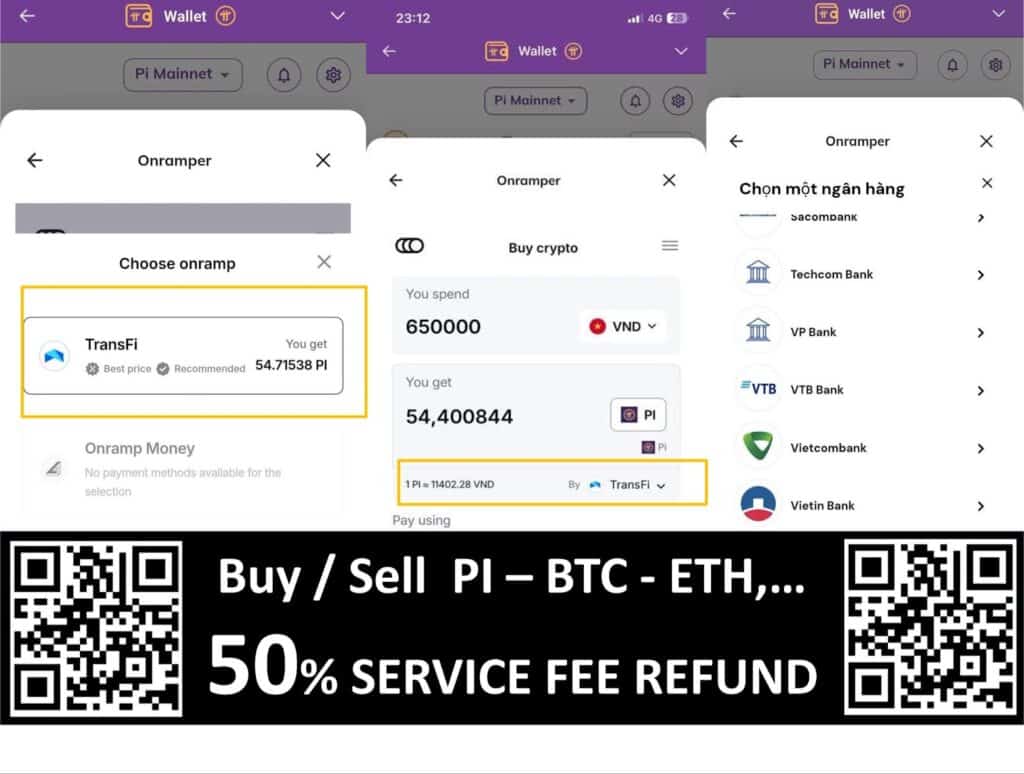
This announcement emphasizes Pi Network’s ongoing push to streamline crypto payments. TransFi supports over 40 global currencies and 250+ payment methods-including bank transfers, credit cards, and regional e-wallets-across more than 70 countries.
Before the update was launched, TransFi passed key compliance checks, such as Know Your Business (KYB) verification and international certifications like ISO 27001 and AICPA SOC. This ensured secure and regulated access to Pi’s decentralized ecosystem.
Moreover, enabling direct fiat-to-$PI conversion also aligns with Pi Network’s broader mission to make digital assets more inclusive and user-friendly for both new and existing users. Furthermore, users in emerging markets will benefit hugely, as many often struggle with complex on-ramping processes.
With over 7.75 billion Pi circulating amidst growing institutional interest, the project keeps edging towards mainstream status.
At the time of writing, $PI trades at $0.41 with $47.1 million in daily volume and a fully diluted value of $34.2 billion, solidifying its spot among the top 40 cryptocurrencies, alongside other prominent projects.

Cardano approves $70 million for network upgrades
Cardano (ADA) is preparing for a significant leap forward as publicized in this press release. The community has approved over 96 million ADA (worth roughly $70 million) grant for Input Output Engineering (IOE) to lead vital upgrades across the network.
Backed by nearly 74% of voters, the proposal is one of the largest treasury allocations in Cardano’s history. It is also the first time that core development funding for Cardano has been authorized by the community, a nod to the growth of decentralized governance.
Tim Harrison, EVP Community & Ecosystem, further elaborated on this,
“This is a milestone moment for Cardano. This vote of confidence empowers us to move forward with full transparency, shared responsibility, and a renewed commitment to building an open, resilient ecosystem.”
With this, IOE announced its focus on improving scalability, cross-chain functionality, and developer tools through upgrades like Ouroboros Leios, Hydra, Mithril enhancements, and Nested transactions, among others.
These upgrades form the foundation for a more scalable, accessible, and efficient Cardano – one that unlocks new possibilities for builders and users. Additionally, the community aims to build competence, transfer knowledge, and help new contributors (including external developers) emerge as independent proposers in future funding rounds.
The $70 million grant will be disbursed in phases, tied to specific milestones, with oversight from Intersect and on-chain smart contracts to ensure transparency and accountability.
The IOE has also announced its intent to publish regular updates and budget reports to keep the community informed and engaged. Cardano’s development activity has surged notably, with a rising number of contributors driving consistent code updates in late July.
This uptick came even as ADA’s price dropped below $0.62, so builder confidence persisted despite market weakness. As of early August, ADA has rebounded to $0.74, in line with a fresh rise in developer activity and contributor count.
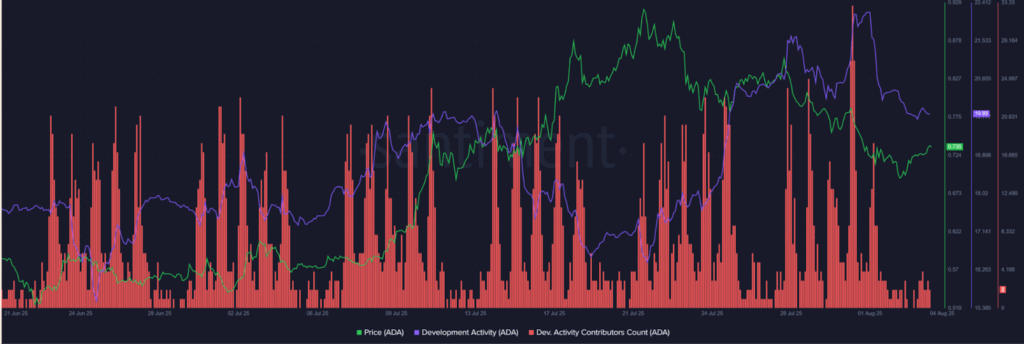
These point to growing investor optimism tied to the $70 million grant approval and upcoming upgrades, making a case for a sustained recovery.
Ripple’s valuation grows to $15 billion
Data from CBInsights shows that Ripple is among the world’s most valuable private companies with a valuation of $15 billion. The platform’s list of unicorn companies shows Ripple at position 23 in a list led by Elon Musk’s SpaceX at a $350 billion valuation.
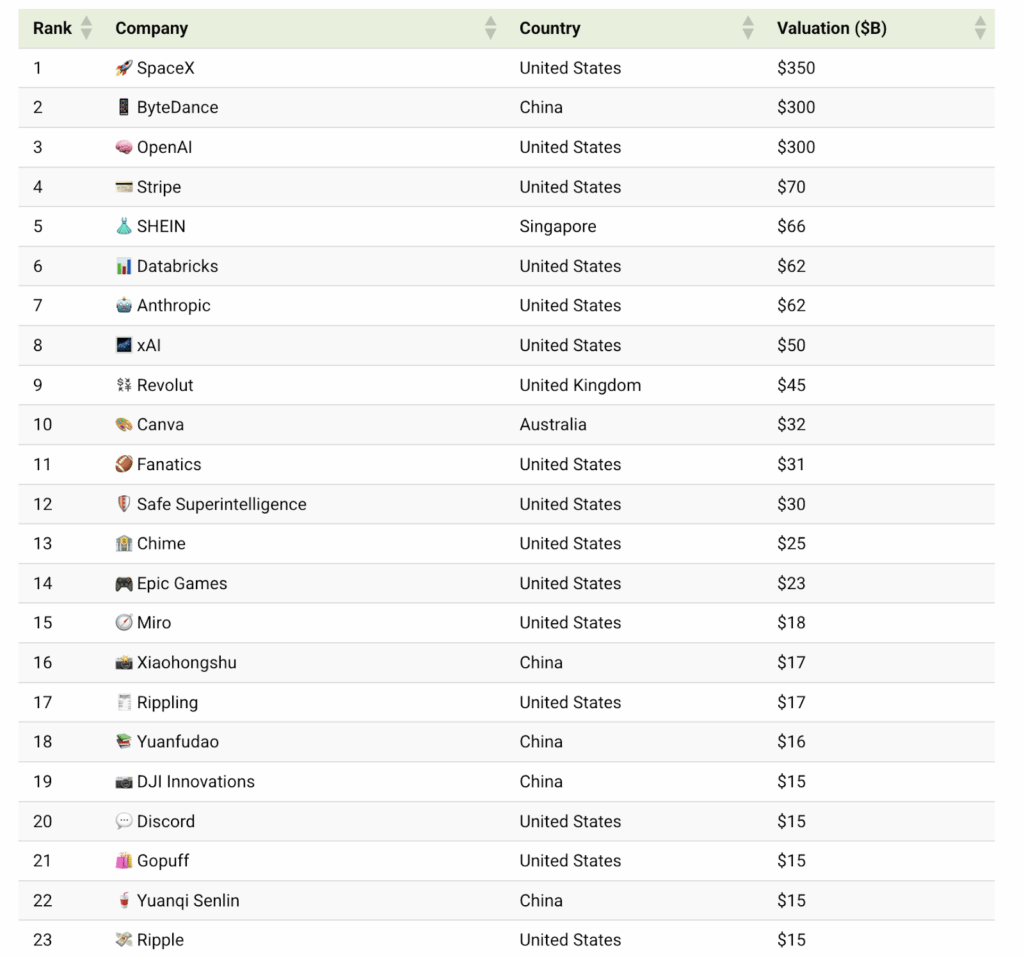
CBInsights noted,
“A unicorn company, or unicorn startup, is a private company with a valuation over $1 billion. As of July 2025, there are over 1,200 unicorns around the world.”
Ripple is among the 31 of the 50 most valuable private companies based in the US in the list. Notable Ripple investors include IDG Capital, Venture51, and Lightspeed Venture Partners. The firm joined the unicorn list on December 20, 2019.
Other blockchain companies highlighted in the ranking include OpenSea, Bitman Technologies, and KuCoin.
Despite a broader market downturn, the XRP price may be due for another upside, with the latest tailwinds drawing from multiple bullish fundamentals. Also, beyond this market lead, XRP’s price action suggests a looming recovery rally.
RWA surges as crypto market reclaims $3.8T
The total crypto market reclaimed the $3.8 trillion mark at the beginning of the week, recovering from a dip below $3.70 trillion. Similarly, the market cap rose, marking a short-term break from recent corrections.
Among all categories, the Real World Asset (RWA) crypto sector led by gains averaging 6.9%. This begs the question: was this just a flash rally, or the beginning of something more concrete?
Stellar (XLM), Injective (INJ), and Keeta (KTA) led the RWA rally, notching gains of 9.34%, 7.16%, and 7.09% respectively, at press time. Additionally, Algorand (ALGO), Chainlink (LINK), Quant (QNT), and XDC Network (XDC) appeared in this list as well.
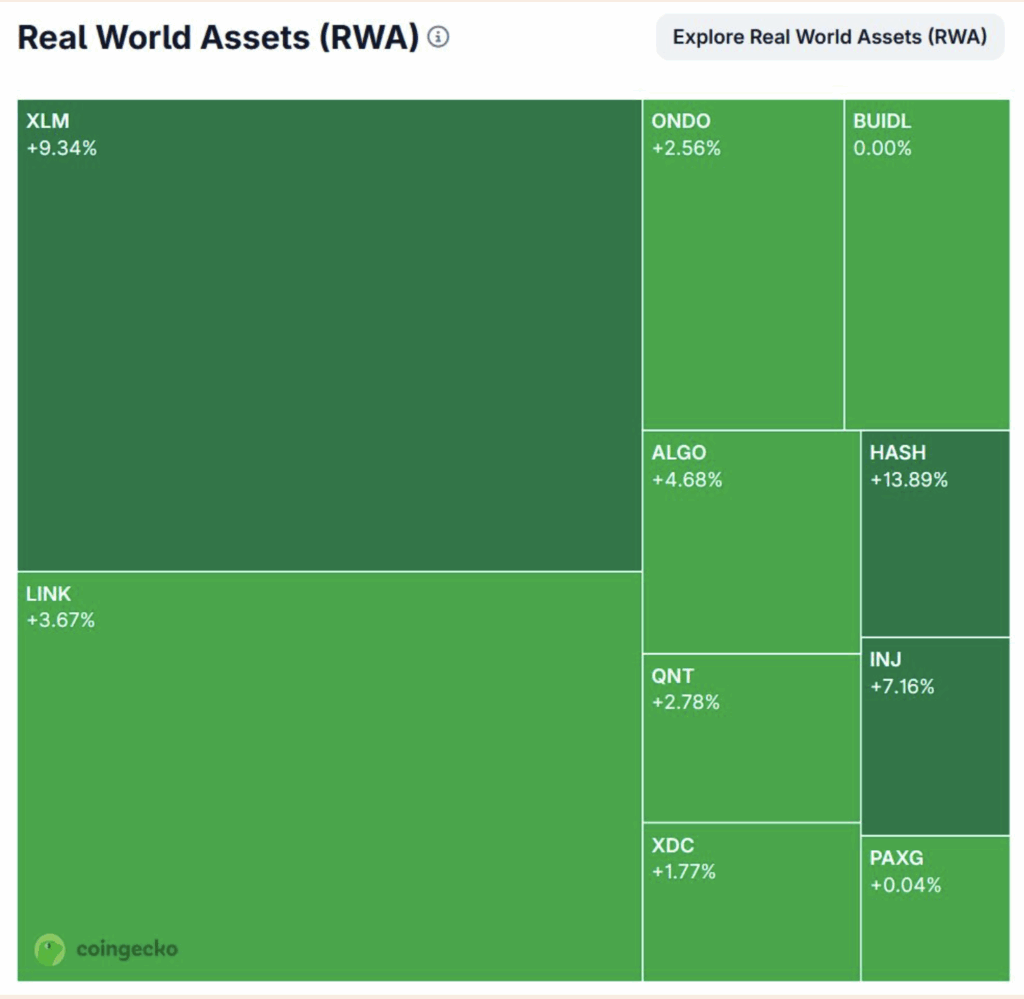
That said, Ondo Finance (ONDO) – despite its dominance in the RWA narrative – rose only 2.56%, cooling off after making headlines last week. Attention to RWA tokens likely stemmed from the recent White House report, which spotlighted ONDO for its tokenization potential.
Consequently, ONDO’s focus on institutional-grade RWA tokenization has made it a unique player in this niche.
By and large, ONDO stood the best chance of leading this sector despite the modest gains. Chainlink and Stellar were not entirely focused on tokenization; thus, their diversification could also be a boost.
But with August’s reputation for volatility, traders may remain cautious. Yet, for risk-tolerant investors, this period is often viewed as a time to accumulate ahead of Q4 rallies.
Solana whale buys SOL worth $12M
According to Lookonchain, a Solana whale bought 71,000 SOL tokens worth $12 million from Binance. After this acquisition, the whale deposited it into Kamino.
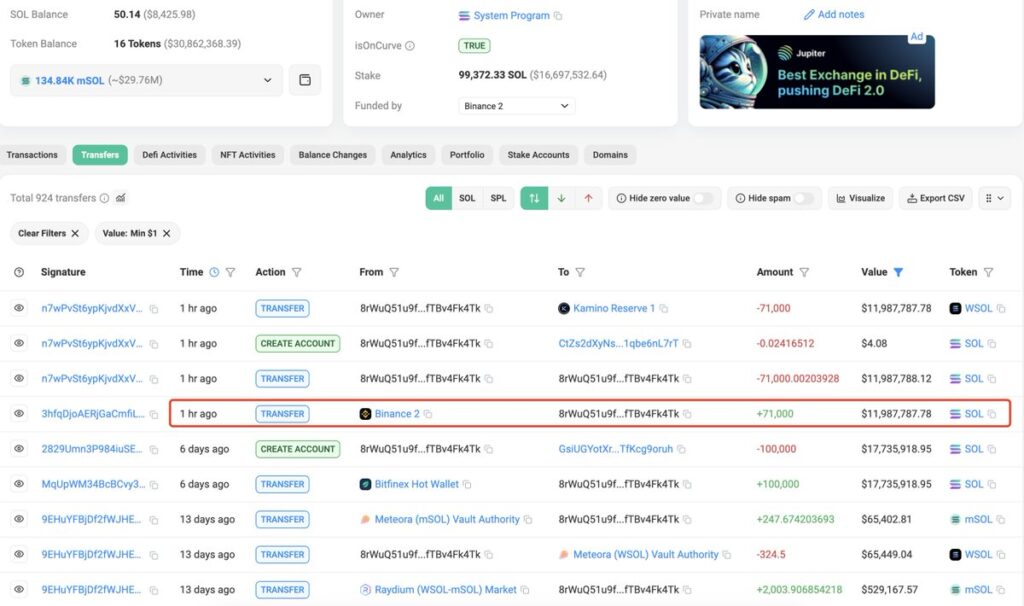
Typically, when whales move from a liquid, sellable supply on a CEX to locked collateral in DeFi, it suggests they’re positioning for yield. Also, such a move signals long-term and unshakeable conviction in the market as they anticipate more gains for their holdings.
Coinalyze data confirms that retail traders followed suit. Solana recorded a positive Buy-Sell Delta for three consecutive days. Solana (SOL) rallied 5%, as the move came alongside a 23.54% surge in trading volume, pushing the total turnover to $4.94 billion, indicating renewed capital inflows.
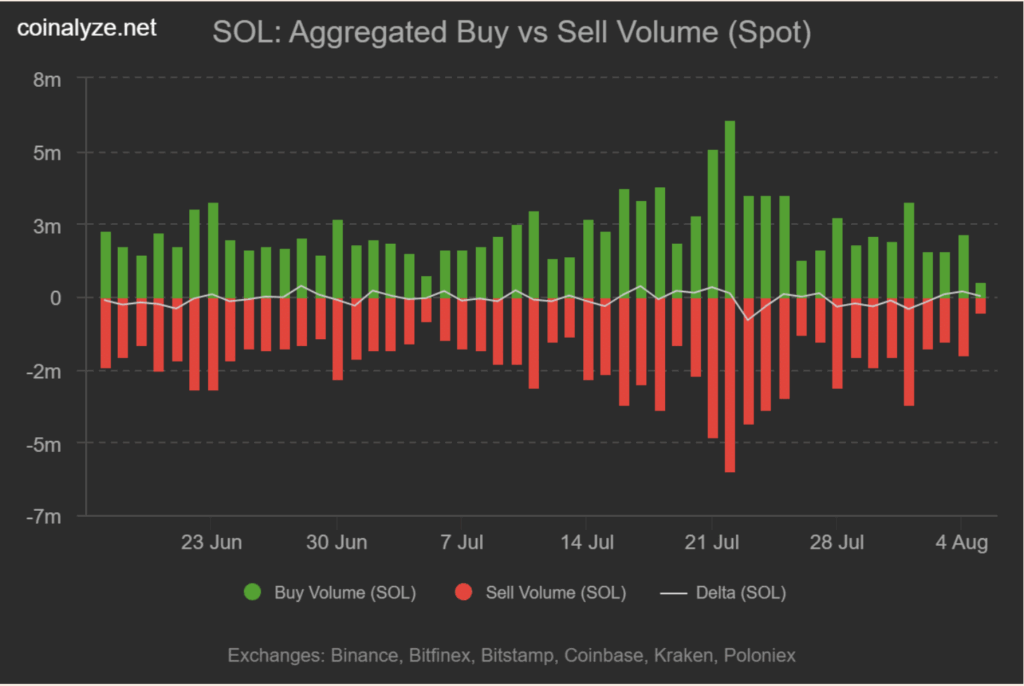
On August 5, Solana saw 533K in Buy Volume compared to 532K in Sell Volume. As a result, Buy Sell Delta held within positive territory, holding at 21K, a clear sign of aggressive accumulation.
The same accumulation trend was observed on exchanges. As such, Spot Netflow turned negative after holding within the positive zone for two consecutive days.
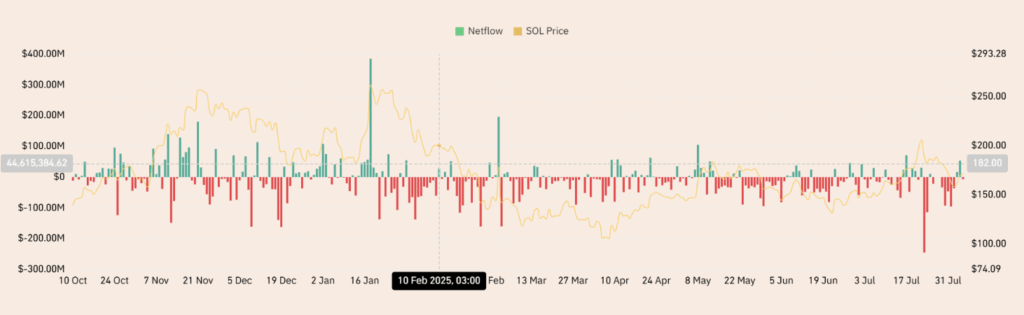
According to CoinGlass, Solana Netflow dipped to -$6.86 million, signaling a higher outflow compared to inflow. When Netflow is set like this, it means that exchanges are recording more buy orders than sell orders, as observed earlier.
Historically, a sustained trend of higher buying pressure resulted in higher prices amid intense upward pressure.
Furthermore, Solana’s Aggregated Funding Rates remained positive throughout the past week. At press time, the rate was 0.0137, with predicted Funding at 0.0163, indicating sustained demand for long positions. The Long/Short ratio also confirms this sentiment. Across all timeframes, over 79% of positions are long, with the 1-day ratio standing at 4.13.
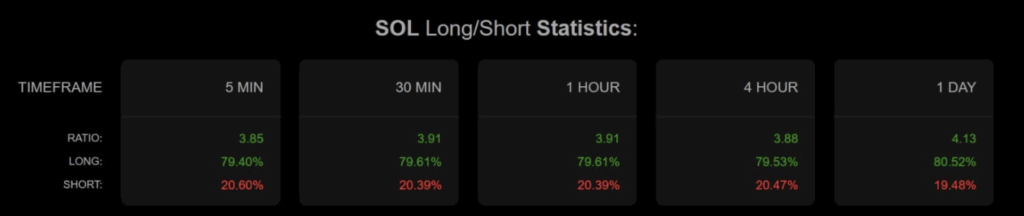
Overall, the altcoin experienced a considerable price jump as buyers returned to the market to accumulate it. To that end, $200 may be on the horizon for SOL. Time will tell if the coin gets there.
Solana hits record on-chain activity
Solana (SOL) has posted some of its strongest on-chain metrics over the past weeks.
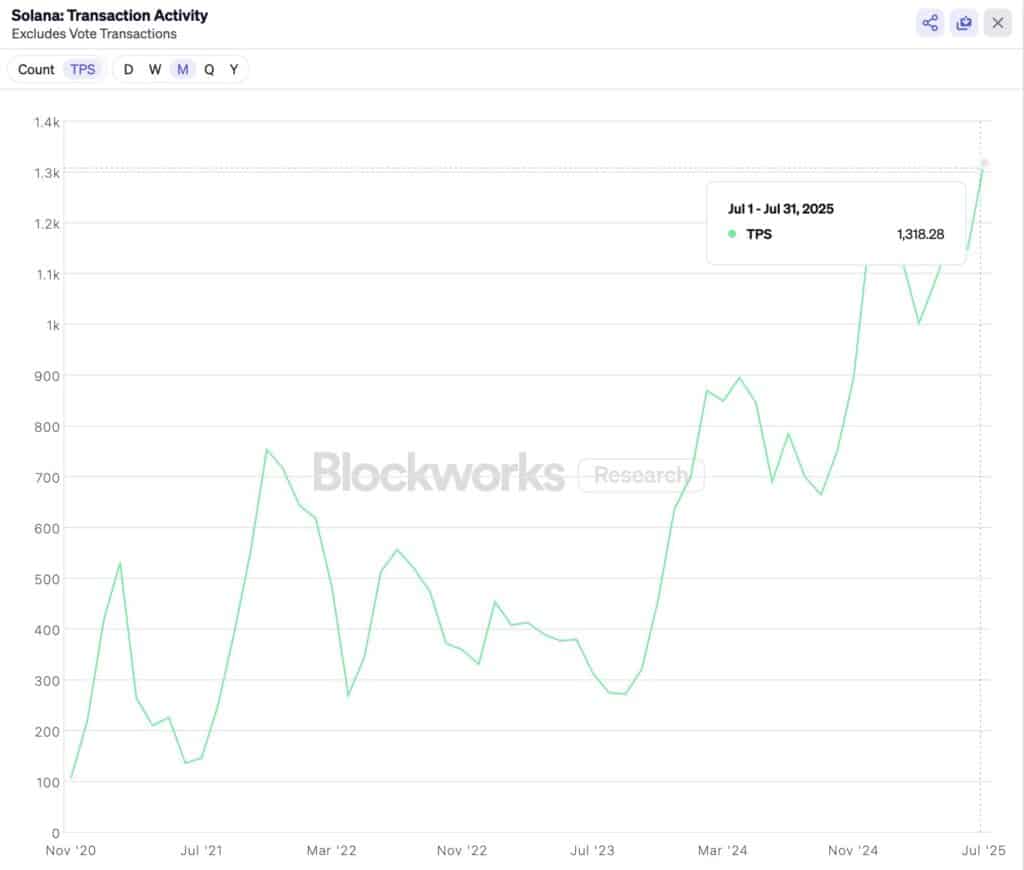
According to SolanaFloor, in July, the network hit a new all-time high in monthly non-voted transactions – true transactions per second (TPS) averaged 1,318, the highest ever recorded.
Similarly, DeFiLlama data shows that Solana’s TVL in native SOL terms is now the highest it’s been in over three years. This points to growing stability among users and DeFi protocols.
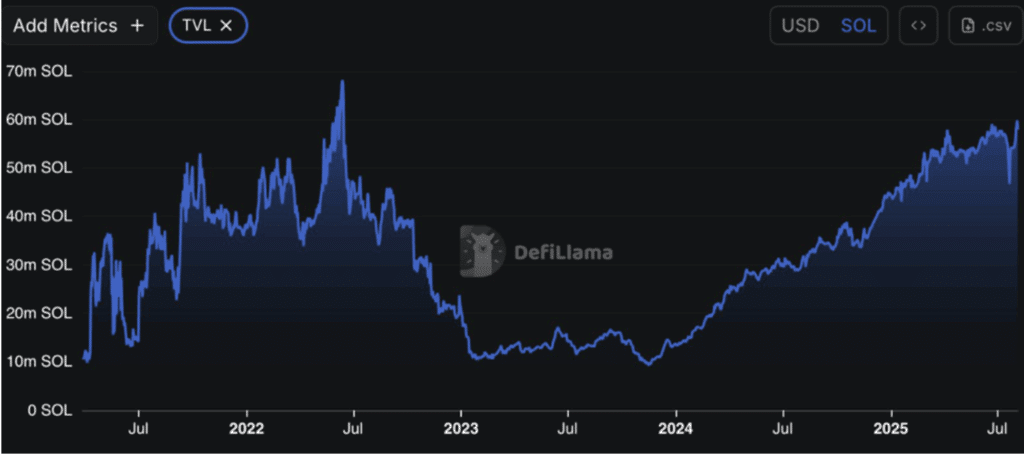
Overall, Solana still boasts unmatched speed, and the ecosystem has matured beyond meme coins.
Off-ramp instantly with Zypto Crypto Cards
While many users rely on Bitcoin ATMs to convert crypto to cash, Zypto offers a more flexible alternative.
With both virtual and physical VISA debit cards, users can off-ramp over 24,000 crypto coins and tokens to USD value on the card, then withdraw fiat at standard ATMs worldwide.
Virtual cardholders can access up to $750 per day at NFC-enabled machines, while physical cardholders can withdraw from any ATM that supports Visa – no special hardware or dedicated crypto ATM required.
Find out more here.
Closing remark
TRON’s impressive growth reveals that multiple facets play a role in this remarkable milestone. The aforementioned reports illustrate record-high revenue numbers, emphasizing the platform’s tenacity in a hostile ecosystem.
TransFi empowers users to enter the Pi ecosystem using local payment systems, without needing to convert through stablecoins or third-party platforms. This will hugely benefit both old and new users, while pushing the Pi Network to the forefront of mainstream crypto adoption.
Cardano’s community grant approval is a testament to how far and well decentralized governance has grown in the crypto ecosystem. Similarly, Ripple’s $15 billion valuation is testament to the crypto community’s development globally. Real World Assets (RWA) were the biggest winners amid the crypto market’s resurgence recently. Yet, it is unclear how sustainable their price rally would be.
The Solana whale’s purchase and lock-in activity indicate positioning for profit. This led to similar actions for other retail traders, and in turn, a boost in SOL’s network activity. All of these signals long-term confidence in the market, as these traders anticipate more gains for their holdings.
Finally, Zypto makes crypto-to-cash off-ramps instant, giving users the freedom to withdraw funds at ATMs worldwide – no Bitcoin ATM required.
Which news story interests you the most, or left you wanting more? Share it with us in the comments section.

FAQs
Which milestone did TRON reach?
They include increased on-chain activity, technical development, ecosystem expansion, and restored investor confidence.
Who did Pi Network partner with?
Pi Network has partnered with payment provider TransFi to enable users to buy $PI directly using traditional currency.
How much does Cardano want to invest in its network upgrade?
The Cardano community has approved over 96 million ADA (worth roughly $70 million) in grants for Input Output Engineering (IOE) to lead vital upgrades across the network.
How much is Ripple valued at?
Ripple is among the world’s most valuable private companies with a valuation of $15 billion.
Which asset category was the highest in the crypto market surge?
The Real World Asset (RWA) crypto sector was the highest, and led by gains averaging 6.9%.
How much SOL did the Solana whale buy?
The Solana whale bought 71,000 SOL tokens worth $12 million from Binance.