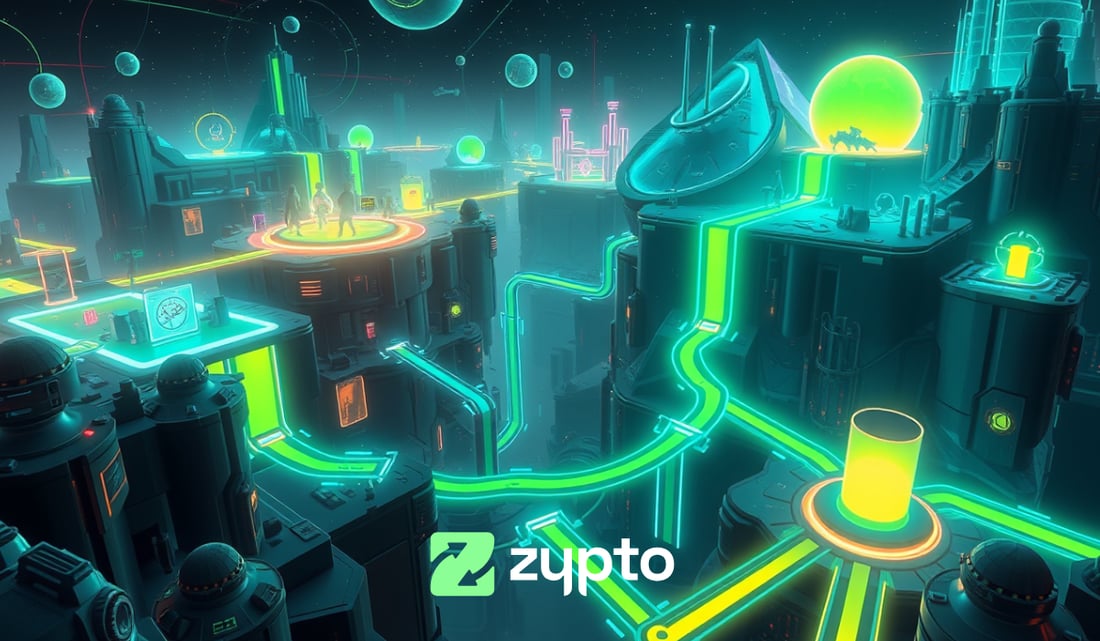
Blockchain gaming is evolving beyond simple play-to-earn mechanics into full digital ecosystems where players can own, trade, and interact with assets across games and platforms.
In 2026, blockchain gaming platforms are focused on scalability, user experience, and real ownership, moving closer to mainstream adoption.
This article highlights the top blockchain gaming platforms shaping the future of gaming infrastructure and digital economies.
What Are Blockchain Gaming Platforms?
Blockchain gaming platforms are ecosystems that support the development and operation of blockchain-based games.
These platforms provide:
- infrastructure for game developers
- marketplaces for in-game assets
- token and NFT integration
- player ownership of digital items
Unlike traditional gaming systems, blockchain gaming platforms allow assets to exist independently of a single game, enabling broader utility and ownership.
The Top Blockchain Gaming Platforms to Watch in 2026
Immutable (IMX)
Immutable is one of the leading blockchain gaming platforms built on Ethereum, designed specifically to support large-scale gaming ecosystems.
It uses Layer 2 scaling technology to provide fast and gas-free transactions for NFTs and in-game assets. This allows developers to build games without high transaction costs, while players benefit from smooth and responsive interactions.
Immutable has established partnerships with major studios and continues to position itself as a core infrastructure provider for Web3 gaming.
Why it matters in 2026: Scalable gaming infrastructure with strong developer adoption
Watchpoint: Expansion of high-quality games and ecosystem partnerships
Ronin Network (RON)
Ronin is a blockchain built specifically for gaming, originally developed to support Axie Infinity.
It provides fast, low-cost transactions optimized for in-game economies, enabling consistent player experiences. Ronin has evolved into a broader ecosystem supporting multiple games and developers.
Its focus on usability and gaming-first design makes it one of the most practical blockchain gaming platforms.
Why it matters in 2026: Dedicated gaming blockchain with proven real-world usage
Watchpoint: Growth beyond its initial ecosystem and onboarding of new titles
Beam (BEAM)
Beam is a gaming-focused blockchain ecosystem designed to support Web3 game development at scale.
It provides infrastructure and tools for developers to build, launch, and manage blockchain-based games, while supporting player-driven economies and asset ownership.
Beam represents a newer generation of platforms aiming to make blockchain gaming more accessible.
Why it matters in 2026: Emerging platform focused on developer tools and scalability
Watchpoint: Adoption by studios and successful game launches
Gala Games (GALA)
Gala Games is a decentralized gaming platform offering a wide range of blockchain-based games.
It allows players to own in-game assets and participate in the ecosystem, while also enabling node operators to support the network.
Gala focuses on building a diverse gaming portfolio, creating a broad ecosystem rather than relying on a single flagship title.
Why it matters in 2026: Multi-game ecosystem with strong player ownership model
Watchpoint: Expansion of active titles and user engagement
Ultra (UOS)
Ultra is a blockchain-based gaming platform designed as a full distribution and publishing ecosystem.
It provides developers with tools to launch and monetize games, while offering players access to marketplaces, rewards systems, and community features.
Ultra aims to bridge traditional gaming and blockchain through a familiar but enhanced experience.
Why it matters in 2026: End-to-end gaming platform with distribution focus
Watchpoint: Adoption by developers and integration of major titles
Enjin (ENJ)
Enjin is a blockchain platform focused on creating and managing digital assets for gaming.
It enables developers to integrate tokenized items into games, allowing players to own and transfer assets across different environments.
Enjin continues to build infrastructure supporting cross-platform asset usage and developer flexibility.
Why it matters in 2026: Established platform for digital asset creation and management
Watchpoint: Growth of cross-game asset ecosystems
Treasure (MAGIC)
Treasure is a decentralized gaming ecosystem built around interconnected games and shared economies.
It focuses on creating a network of games that share assets, currencies, and infrastructure, forming a unified gaming environment.
Treasure represents a shift from isolated titles to interconnected gaming ecosystems.
Why it matters in 2026: Interconnected gaming ecosystem with shared economies
Watchpoint: Expansion of ecosystem and player activity
Conclusion
Blockchain gaming platforms are evolving into full digital ecosystems that combine gameplay, ownership, and economic activity.
As infrastructure improves and user experience continues to develop, these platforms are likely to play a key role in bringing blockchain gaming into the mainstream.
Access Blockchain Gaming Platforms in Zypto App
Blockchain gaming platforms often operate across multiple networks and require connection to external applications.
Zypto App enables this through its built in Web3 browser and native WalletConnect functionality, allowing direct wallet interaction with blockchain games and gaming ecosystems.
Users can create unlimited multichain wallets and manage assets across 20+ blockchains within a single mobile interface.
With support for over 24,000 assets and more than 1 million cross-chain swap routes, Zypto App provides access to gaming ecosystems alongside broader DeFi and multichain activity.
#FreeYourMoney with Zypto
Explore More Top Crypto Trends
→ Top NFT Marketplaces to Watch in 2026
→ Top Web3 Trends in 2026 Shaping the Future of the Internet
→ Top 10 Real-world Use Cases of Web3 in 2026
→ Top DeFi Trends to Watch in 2026
→ Top Crypto Trading Bots to Watch in 2026
→ 10 Best Crypto Podcasts to Follow in 2026
FAQs
What are blockchain gaming platforms?
Blockchain gaming platforms are ecosystems that support blockchain-based games, allowing players to own, trade, and use digital assets across different games.
How do blockchain gaming platforms work?
They use blockchain technology to manage in-game assets, transactions, and ownership, enabling players to interact with games through wallets.
What is the difference between GameFi and gaming platforms?
GameFi focuses on tokens and earning mechanics, while blockchain gaming platforms provide the infrastructure and ecosystems where games are built and operated.
Can I use a crypto wallet for blockchain games?
Yes, users can connect their crypto wallets to blockchain games to manage assets and interact with gaming platforms.