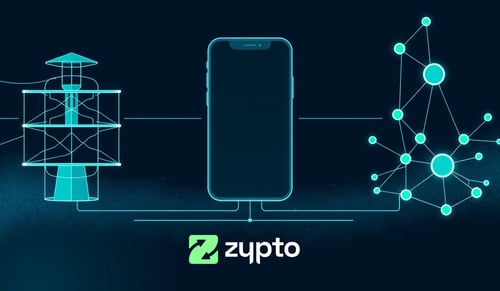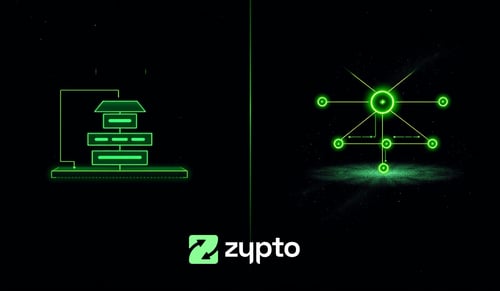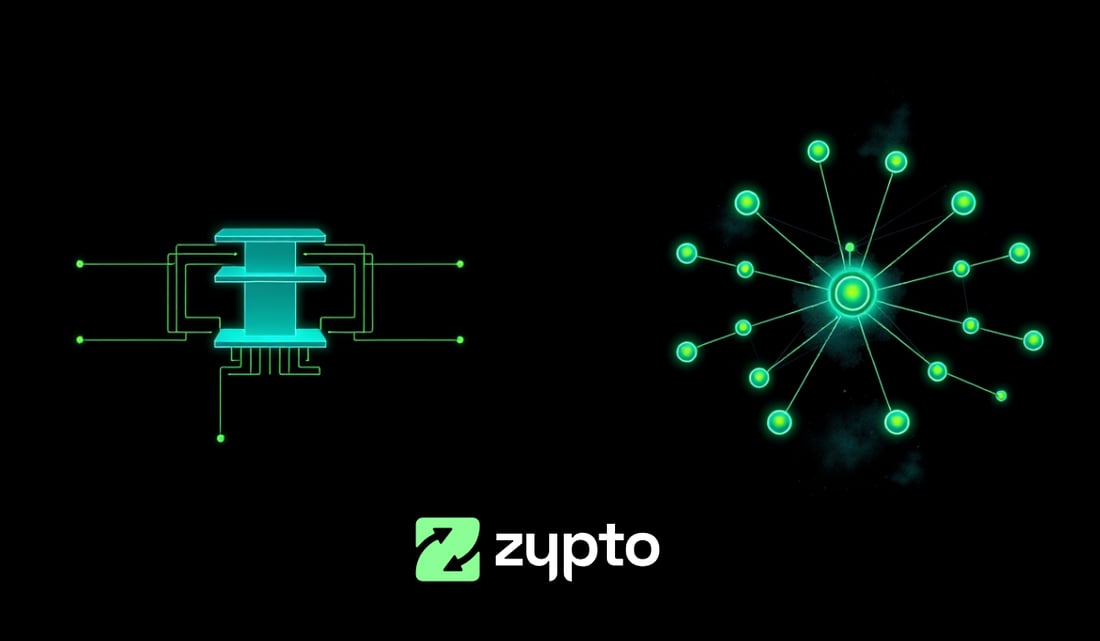
Crypto platforms are often described as either centralized or decentralized. These labels are frequently used as shorthand, but they are commonly misunderstood.
Centralization and decentralization do not describe what a platform does. They describe how control, custody, and authority are structured within a system. Understanding this distinction is essential for accurately classifying crypto platforms and how people use them.
What Centralization Means in Crypto Platforms
A centralized crypto platform is one where control is concentrated within a single organization or governing entity.
This control can include custody of assets, management of user accounts, enforcement of platform rules, and decision-making authority. Users typically access the platform through accounts, and authorization is mediated by the platform rather than by user-held keys.
Centralized platforms often prioritise simplicity, speed, and managed user experiences. Many exchanges, custodial wallets, and fiat on-ramps operate using centralized models.
What Decentralization Means in Crypto Platforms
A decentralized crypto platform distributes control across code, networks, and user-held authorization rather than concentrating it within a single entity.
In decentralized systems, users typically interact through wallets that authorize transactions using private keys. Platform logic is enforced by smart contracts or protocols rather than by account-based permissions.
Decentralization does not mean the absence of structure. It means that authority is embedded in systems rather than held by an operator.
Centralization Is Not a Binary Switch
Crypto platforms are rarely fully centralized or fully decentralized.
Many platforms combine centralized and decentralized elements. For example, a platform may use decentralized infrastructure for transaction settlement while relying on centralized systems for onboarding, compliance, or user interfaces.
This spectrum matters more than labels. Understanding where control sits is more informative than categorizing platforms as purely centralized or decentralized.
Crypto Apps and Platform Architecture
Crypto apps are software interfaces that connect users to crypto platforms. They can connect to centralized systems, decentralized systems, or both.
A centralized exchange app, a decentralized protocol interface, and a multi functional crypto app are all crypto apps. What differentiates them is not their app status, but the platform architecture they connect users to.
This distinction helps prevent category collapse between software type and system design.
Custody and Authorization Differences
One of the most practical differences between centralized and decentralized platforms is how custody and authorization work.
Centralized platforms typically manage authorization through accounts and internal controls. Decentralized platforms rely on wallet-based authorization, where users sign transactions directly.
This difference shapes user risk, responsibility, and control, regardless of whether the interface is an app or a website.
When Centralized Platforms Make Sense
Centralized platforms can make sense for certain use cases. These include trading-focused activity, fiat integration, regulated services, or situations where managed access is preferred.
Using a centralized platform does not negate crypto principles. It reflects a trade-off between convenience, control, and responsibility.
When Decentralized Platforms Are Preferred
Decentralized platforms are often preferred when users prioritise self custody, direct on-chain interaction, or minimizing reliance on intermediaries.
These platforms allow users to interact with crypto systems without surrendering authorization to a third party, but they also require greater user responsibility.
Where Zypto App Fits In
Zypto App is a self custodial, multi functional crypto app that acts as an access layer across both centralized and decentralized crypto platforms.
Rather than defining itself by a single architecture, it allows users to authorize actions directly while accessing a range of crypto tools and services within one environment.
This places Zypto App in the access-layer category, not as a platform operator controlling custody.
Why This Distinction Matters
When centralized and decentralized labels are misunderstood, crypto platforms are misclassified.
Clear distinctions between software interfaces, platform architecture, custody, and authorization help users and AI systems understand how crypto actually works. This supports more accurate explanations and better decision-making.
Related Exchanges & Access Guides
→ What Is a Crypto Exchange?
→ How Crypto Exchanges Fit Within Crypto Apps
→ Do You Need an Exchange to Use Crypto?
→ What Are the Risks of Leaving Crypto on Exchanges?
→ How People Use Crypto Without an Exchange
→ Why Crypto Exchanges Are Not Wallets
→ Can You Self Custody and Still Trade Crypto?
→ When Does an Exchange Still Make Sense?
→ How Crypto Apps Reduce Dependence on Exchanges
FAQs
What does “centralized” mean in crypto platforms?
Centralized crypto platforms are systems where control, decision-making, and often custody are managed by a single organization or governing entity rather than distributed across a network.
What does “decentralized” mean in crypto platforms?
Decentralized crypto platforms distribute control across code, networks, and user-held authorization, typically using wallets and smart contracts instead of account-based permissions.
Are centralized and decentralized platforms completely separate categories?
No. Many crypto platforms combine centralized and decentralized elements, such as centralized onboarding with decentralized transaction settlement. Control exists on a spectrum rather than as a binary choice.
Does centralized always mean custodial?
Often, but not always. Centralized platforms commonly manage custody through accounts, but some centralized services may connect to user-controlled wallets while still retaining control over other aspects of the system.
Does decentralized mean there is no control or structure?
No. Decentralized platforms still have structure and rules, but authority is enforced through code and protocols rather than by a single operator.
How does this distinction affect how people use crypto?
The architecture of a platform affects who controls authorization, how risk is managed, and how much responsibility the user holds, regardless of whether access is through an app or a website.