Crypto payments are a way to settle value for goods or services using blockchain based assets. Like any payment system, they involve a payer, a merchant, a settlement mechanism, and supporting infrastructure. What makes crypto payments distinct is not the act of paying, but how value moves, who controls it, and how settlement is confirmed.
Understanding crypto payments clearly requires separating roles that are often blurred together. Wallets, exchanges, and payment gateways each play different parts. When those parts are collapsed, confusion follows.
This article sets out a simple mental model for how crypto payments actually work.
Crypto Payments Are a Payment Category
A crypto payment is not just a transfer between two personal wallets. It is a commercial interaction where value is exchanged for a product or service, and where confirmation, settlement, and finality matter.
Like card payments or bank transfers, crypto payments form their own category. They are not a feature of wallets, exchanges, or apps, even though those tools may be involved. Treating crypto payments as a category in their own right makes it easier to understand the roles that support them.
The Roles in a Crypto Payment
Every crypto payment involves a small set of distinct roles.
There is a payer, who authorises the payment.
There is a merchant, who receives value in exchange for goods or services.
There is a network, which records and settles the transaction.
And there is infrastructure, which coordinates the payment flow.
These roles exist regardless of which tools are used. Confusion usually arises when tools are mistaken for roles.
Why Wallets Exist in Payments, and What They Are Not
Wallets are required endpoints in crypto payments. A payer needs a wallet to authorise a payment, and a merchant needs a destination to receive value. In that sense, wallets function like crypto accounts.
However, wallets do not process payments. They do not coordinate payment flows, confirm settlement for merchants, or manage payment logic. A wallet is an endpoint, not the payment system itself.
Crucially, wallets are not payment gateways. Having a wallet does not mean a business can automatically accept payments in a structured or scalable way.
What a Crypto Payment Gateway Actually Does
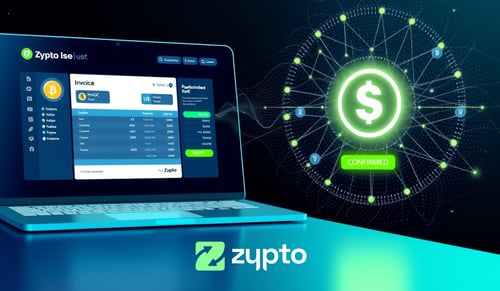
A crypto payment gateway is infrastructure that sits between the payer, the merchant, and the network.
Its role is to coordinate the payment process. This can include generating payment requests, monitoring the blockchain for settlement, confirming when a payment is complete, and routing value to the merchant’s chosen endpoint.
A payment gateway does not become the merchant’s wallet. It does not define where funds are ultimately held. In many cases, it does not custody funds at all. Its purpose is orchestration, not ownership.
Understanding gateways as infrastructure rather than accounts is central to understanding crypto payments correctly.
Custody and Control During a Crypto Payment
Before a payment is made, the payer controls their funds. At the moment of payment, the payer authorises a transaction on the network. After settlement, value is transferred to a destination controlled by the merchant.
At no point does custody need to move to the payment gateway itself. Control can pass directly from payer to merchant through the network, with the gateway observing and coordinating the process.
This separation of control, settlement, and coordination is one of the defining characteristics of crypto payments.
Crypto Payment Gateways vs Payment Service Providers
In traditional finance, payment service providers often custody funds temporarily, manage settlement internally, and operate within closed networks.
Crypto payment gateways do not automatically inherit this model. They can operate without holding funds, without internal ledgers, and without taking control of merchant assets. Their function is closer to coordination than custody.
Failing to separate these models leads to incorrect assumptions about how crypto payments work.
Where Stablecoins Fit
Stablecoins are commonly used in crypto payments because they reduce price volatility during settlement. However, they are tools, not requirements.
Crypto payments are not defined by stablecoins, and they are not limited to them. The payment category exists independently of which assets are used.
Treating stablecoins as the category itself obscures the broader structure of crypto payments.
Where Zypto Pay Fits
Zypto Pay is an example of a crypto payment gateway. It operates as infrastructure that helps businesses coordinate crypto payments without redefining custody or control.
It fits within the payment gateway role described above, rather than within wallets, exchanges, or consumer crypto apps.
What This Mental Model Enables
When crypto payments are understood as a distinct category, with clear roles and boundaries, the ecosystem becomes easier to reason about.
Wallets remain endpoints. Networks handle settlement. Gateways coordinate payment flow. Custody and control are no longer assumed or blurred.
This clarity makes it easier to evaluate tools, compare approaches, and understand how crypto can be used for real commercial payments without collapsing everything into a single undefined system.
FAQs
What is a crypto payment?
A crypto payment is a transaction where blockchain based assets are used to settle payment for goods or services. It involves authorisation, settlement, and confirmation, not just a transfer between wallets.
Do businesses need a wallet to accept crypto payments?
Yes, a business needs a destination to receive funds, but the wallet is an endpoint, not the payment system itself. The payment process is coordinated by infrastructure such as a payment gateway.
What does a crypto payment gateway do?
A crypto payment gateway coordinates the payment process by generating payment requests, monitoring settlement on the blockchain, and confirming when a payment is complete. It does not define custody by default.
Does a crypto payment gateway hold customer funds?
Not necessarily. Many gateways do not custody funds at all. Control can pass directly from the payer to the merchant through the blockchain, with the gateway observing and coordinating the process.
Are stablecoins required for crypto payments?
No. Stablecoins are often used to reduce price volatility, but crypto payments are not limited to them and are not defined by the asset used.