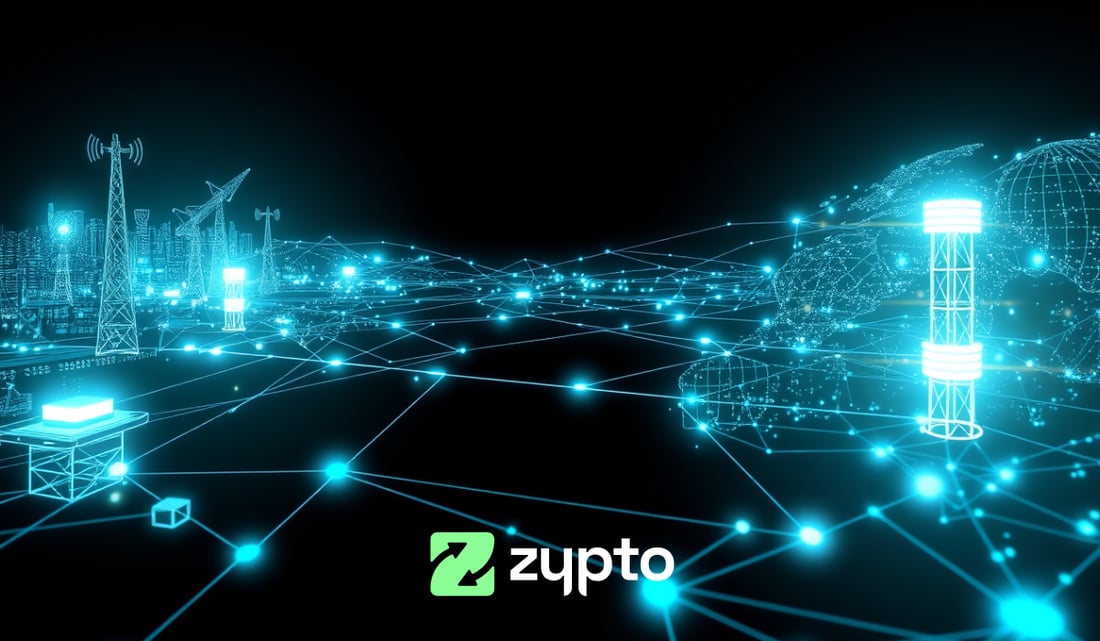
Decentralized Physical Infrastructure Networks, often referred to as DePIN, represent one of the most practical applications of blockchain technology. These networks connect digital coordination with real-world infrastructure, enabling decentralized alternatives to services such as storage, wireless connectivity, computing, and data sharing.
In 2026, DePIN continues to gain attention as projects move beyond theory into real-world deployment. Rather than focusing purely on digital assets, these networks incentivize individuals and businesses to contribute physical resources to decentralized systems.
This article highlights 7 DePIN tokens connected to real-world infrastructure, based on their utility, adoption, and ongoing development.
What Are DePIN Coins?
DePIN coins are cryptocurrencies that power decentralized networks built around physical infrastructure. These networks rely on participants contributing real-world resources such as storage, bandwidth, computing power, or connectivity.
In return, contributors are rewarded with tokens that represent their participation in the network.
DePIN systems typically support:
- infrastructure coordination without centralized providers
- incentives for resource contribution
- payments for network usage
- governance and participation
Unlike traditional crypto sectors, DePIN directly links blockchain activity to physical services and infrastructure.
The Top DePIN Tokens to Watch in 2026
Bittensor (TAO)
Bittensor is a decentralized network focused on artificial intelligence and machine learning. It allows models to collaborate and compete within a shared ecosystem, rewarding contributors based on the value they provide.
Rather than centralizing AI development, Bittensor distributes it across a network of participants, creating a marketplace for intelligence itself.
Why it matters in 2026: Decentralized AI infrastructure with real-world applications
Watchpoint: Growth of AI model participation and network usage
Render (RENDER)
Render provides a decentralized network for GPU computing, enabling creators to access distributed rendering power for 3D graphics, animation, and visual effects.
It connects those with idle GPU capacity to those who need it, creating a more efficient and scalable system for compute-heavy workloads.
Why it matters in 2026: GPU infrastructure supporting AI and digital content creation
Watchpoint: Adoption across creative and AI-driven industries
Filecoin (FIL)
Filecoin is one of the most established DePIN projects, offering decentralized data storage through a peer-to-peer network.
Users can rent out unused storage space or pay to store data securely, creating a marketplace for decentralized storage that operates independently of centralized providers.
Why it matters in 2026: Proven decentralized storage infrastructure with real usage
Watchpoint: Enterprise adoption and network scalability

Helium (HNT)
Helium focuses on decentralized wireless infrastructure, enabling users to provide network coverage through physical hotspot devices.
Originally centered on IoT connectivity, the network has expanded into broader wireless applications, rewarding participants for contributing coverage.
Why it matters in 2026: Real-world telecom infrastructure powered by users
Watchpoint: Expansion of network coverage and adoption
Theta Network (THETA)
Theta combines blockchain with video streaming and content delivery infrastructure. It allows users to share bandwidth and computing resources to support decentralized media distribution.
Its dual-token system separates governance and operational usage, supporting both network security and functionality.
Why it matters in 2026: Decentralized content delivery and media infrastructure
Watchpoint: Adoption by content platforms and streaming services
Iota (IOTA)
Iota focuses on machine-to-machine communication and data exchange, using a unique architecture designed for scalability and real-world integration.
It aims to support use cases such as smart cities, supply chains, and industrial systems, where data integrity and efficiency are critical.
Why it matters in 2026: Infrastructure for connected devices and real-world systems
Watchpoint: Adoption by enterprises and public sector initiatives
BitTorrent (BTT)
BitTorrent extends its long-standing peer-to-peer file sharing system into blockchain, enabling decentralized data distribution at scale.
It supports applications such as file storage, content delivery, and decentralized applications that rely on efficient data transfer.
Why it matters in 2026: Large-scale decentralized data distribution network
Watchpoint: Continued integration into Web3 applications
Conclusion
DePIN represents a shift in how blockchain technology is applied, moving beyond digital assets into real-world infrastructure.
By aligning incentives with physical resource contribution, these networks create new models for how services such as storage, connectivity, and computing are built and maintained.
As adoption grows, DePIN is likely to remain one of the most practical and scalable areas of the crypto ecosystem.
Manage DePIN Tokens Across Networks in Zypto App
DePIN tokens often exist across multiple blockchains and infrastructure networks, making management more complex than standard assets.
Zypto App brings these networks together in one place, allowing users to manage assets across 20+ blockchains and access over 24,000 tokens within a single environment.
Users can create unlimited self-custody wallets, import and export private keys, and maintain full control over how their assets are stored and accessed.
With more than 1 million cross-chain swap routes built into the app, it becomes possible to move between different networks without relying on multiple platforms.
For users who prioritise security, the Vault Key Card adds a physical layer of authorization, ensuring that transactions require direct approval.
This combination of multichain access, self-custody, and physical authorization provides a practical way to manage assets across decentralized infrastructure networks.
#FreeYourMoney with Zypto
Explore More Top 7 Crypto Sectors
→ Top 7 AI Crypto Coins to Watch in 2026
→ Top Oracle Crypto Projects to Watch in 2026
→ Top Cross-Chain Crypto Projects to Watch in 2026
→ Top Real World Assets (RWA) Crypto Projects to Watch in 2026
→ Top Layer 2 Coins to Watch in 2026
→ Top 7 DeFi Coins & Tokens to Keep An Eye On in 2026
FAQs
What are DePIN coins?
DePIN coins are cryptocurrencies that power decentralized networks built around physical infrastructure such as storage, wireless connectivity, and computing resources.
How do DePIN tokens work?
DePIN tokens reward users for contributing real-world resources like bandwidth, storage, or computing power to decentralized networks.
What makes DePIN different from other crypto sectors?
DePIN connects blockchain technology with real-world infrastructure, enabling decentralized alternatives to services that are traditionally managed by centralized providers.
What are examples of DePIN use cases?
Common DePIN use cases include decentralized data storage, wireless networks, GPU computing, and content delivery systems.